Africa
-
Mozambique
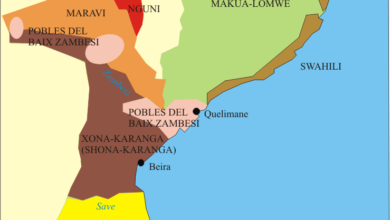
Mozambican language
The Republic of Mozambique is a country belonging to Africa, whose capital is Maputo. It has a population of 29 million inhabitants (50th) and an area of 801,590 km 2 (35th). Its human development index is low (180º) and its official currency is the Mozambican metical. But what language is spoken in Mozambique? What language do they speak in Mozambique? Mozambique only has one official language, Portuguese. However, it is not the most widely spoken language. Mozambique is a multilingual country, where 43 languages reside. The most widely spoken languages in households are the following: Macua (25.42%), Portuguese (12.78%), Tsonga…
Read More » -
Mozambican history
Brief history of Mozambique summarized We give a brief and simple overview of the history of Mozambique, an African country that was colonized by the Portuguese. Old Mozambican After 100 AD the Bantus arrived in what is now Mozambique. They lived from agriculture and made iron tools. They were organized in small kingdoms. In the 9th century, Arab merchants reached the coast of Mozambique. For centuries there was trade between Africans and Arabs. Then, in 1498, the Portuguese sailor Vasco Da Gama landed on the Ilha de Mocambique on his way to India. In 1511 a Portuguese named Antonio Fernandes…
Read More » -
History of Algeria
Brief history of Algeria summarized A brief overview of the history of Algeria. Old Algeria In the year 150 BC there were Berber kingdoms in what is now Algeria. However, in 24 BC they were annexed by the Romans. The Romans built roads, cities, and aqueducts. Under the Romans, Algeria converted to Christianity. The great theologian Augustine (354-430) lived in Hippo (now Annaba). When the Roman Empire in the west collapsed, a people called the Vandals passed through Algeria on their way to Tunisia, but had little effect on the area. At the end of the 7th century the Arabs…
Read More » -
Ugandan history
Brief history of Uganda summarized A brief review of the history of Uganda, an African country. The British in Uganda In 1875 the explorer Henry Stanley arrived in Uganda. At that time Uganda was divided into kingdoms. Soon after, the first missionaries arrived in Uganda. The first Anglican missionaries arrived in Uganda in 1877. The first Catholic missionaries arrived in 1879. Catholics, Protestants and Muslims tried to convert the Ugandans. However, there was much hostility towards the new religions. In 1885, James Hannington, the first Bishop of Eastern Equatorial Africa, was assassinated. However, in the wake of the missionaries came…
Read More » -
Tunisia
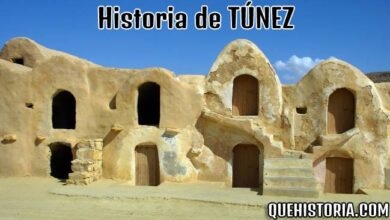
History of Tunisia
Brief history of Tunisia summarized A brief and enjoyable review of the history of Tunisia, an African country. Old Tunisia Around 8,000 BC, humans lived in what is now Tunisia by hunting and gathering. After about 5,000 BC they began to farm, although they still used stone tools. Then, around 1100 BC, the Phoenicians from what is now Lebanon settled and traded in the area. Around the year 480 BC the Phoenicians founded Carthage. Little by little this city became stronger. Over time, the Carthaginians built an empire in the Mediterranean. However, they came into conflict with Rome. The first…
Read More » -
Tanzania
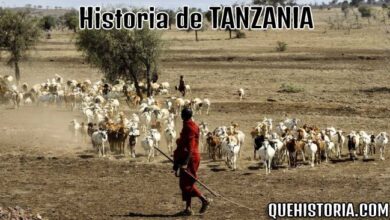
Tanzanian history
Brief history of Tanzania summarized A brief overview of the history of Tanzania, a country in Africa. Ancient Tanzania Early humans in Tanzania lived by hunting animals and gathering plants. Agriculture in Tanzania probably began around 1,000 BC, but farmers still made tools out of wood and stone. However, in the 4th century AD the Bantu began to migrate to Tanzania. They brought iron tools and weapons. Meanwhile, people on the east coast of Africa had contact with Mediterranean civilizations. The Persians and later the Romans sailed to Tanzania. Later, in the 8th century, Arab merchants sailed into the area.…
Read More » -
Nigeria
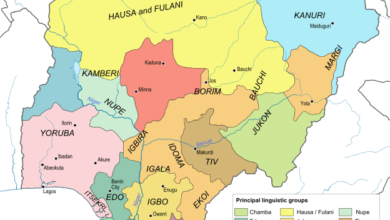
Nigerian language
The Federal Republic of Nigeria is a country belonging to Africa, whose capital is Abuja. It is the 7th most populous country in the world (191 million inhabitants) and the 32nd largest (923,768 km 2). Its human development index is low (152º) and its official currency is the naira. And what language is spoken in Nigeria? What language do they speak in Nigeria? Nigeria only has one official language, English, as part of the legacy of the British Colony of Nigeria that ended in 1960. It was then chosen as a way to facilitate the cultural and linguistic cohesion of…
Read More » -
Nigerian history
The beginnings of Nigeria The history of Nigeria is rooted in an early civilization with outstanding art. The plateau area was the meeting point of cultural influences and agricultural trades. By 500 BC the Nok culture flourished. The Nok Society (People of the Plateau) were farmers who made iron tools and weapons known for their terracotta heads and figures. In the North, a strong state system based on divine kingship developed. The people raised horses, cattle, grew grain, cotton, and made cloth and iron. Two empires arose (Hausa-Bokwoi 100-1000 AD and Kanem-Borno 11th century). Northerners converted to Islam, traded gold…
Read More » -
Nigeria

Nigerian music
Nigerian folk music includes many types of folk and popular music, some of which are known throughout the world. Folk music styles are related to the country’s multitudes of ethnic groups, each with their own techniques, instruments, and songs. Little is known about the country’s music history before contact with Europe, although bronze carvings dating from the 16th and 17th centuries have been found depicting musicians and their instruments. The largest ethnic groups are the Igbo, Hausa and Yoruba. The traditional music of Nigeria and all of Africa is almost always functional; in other words, it is done to mark…
Read More » -
Nigerian traditions and customs
What traditions and customs are there in Nigeria? Let’s know what are the customs and traditions of Nigeria, an African country. Gastronomy Food in daily life Western influences, especially in urban centers, have transformed Nigerian eating habits in many ways. City dwellers are familiar with the canned, frozen, and pre-packaged foods found in most Western-style supermarkets. Foreign restaurants are also common in big cities. However, supermarkets and restaurants are often too expensive for the average Nigerian; therefore, only the rich can afford to eat like Westerners. Most urban Nigerians seem to combine traditional cuisine with a bit of Western-style food…
Read More »