-
Qatari traditions and customs
What traditions and customs are there in Qatar? Brief drawing of the customs and traditions of Qatar. Food in daily life The presence of foreign workers has introduced foods from all over the world. Qatari cuisine has been influenced by close ties to Iran and India, and more recently by the arrival of Arabs from North Africa and the Levant, as well as by Muslim dietary conventions. Muslims generally refrain from eating pork and drinking alcohol, and neither is served publicly. Central foods of Qatari cuisine include the many native varieties of dates and shellfish. Other foods grown locally or…
Read More » -
History of Oman
Brief history of Oman summarized A look at the history of Oman, briefly. Oman Principles As early as 2,300 BC, Oman was recorded by the Sumerians of ancient Iraq as a rich source of copper. In ancient times, Oman was also a source of frankincense. After 500 BC, Oman was controlled by the Persian Empire based in what is now Iran. They were later ruled by other Iranian empires, the Parthians and the Sassanids. In the 7th century AD the people of Oman adopted Islam. At that point Iranian influence ended. In 1507 the Portuguese reached Oman by sea. The…
Read More » -
Mozambique
Mozambican language
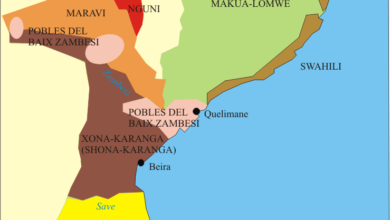
The Republic of Mozambique is a country belonging to Africa, whose capital is Maputo. It has a population of 29 million inhabitants (50th) and an area of 801,590 km 2 (35th). Its human development index is low (180º) and its official currency is the Mozambican metical. But what language is spoken in Mozambique? What language do they speak in Mozambique? Mozambique only has one official language, Portuguese. However, it is not the most widely spoken language. Mozambique is a multilingual country, where 43 languages reside. The most widely spoken languages in households are the following: Macua (25.42%), Portuguese (12.78%), Tsonga…
Read More » -
Mozambican history
Brief history of Mozambique summarized We give a brief and simple overview of the history of Mozambique, an African country that was colonized by the Portuguese. Old Mozambican After 100 AD the Bantus arrived in what is now Mozambique. They lived from agriculture and made iron tools. They were organized in small kingdoms. In the 9th century, Arab merchants reached the coast of Mozambique. For centuries there was trade between Africans and Arabs. Then, in 1498, the Portuguese sailor Vasco Da Gama landed on the Ilha de Mocambique on his way to India. In 1511 a Portuguese named Antonio Fernandes…
Read More » -
Lebanon

Lebanon language
The Lebanese Republic (Lebanon) is a country belonging to Asia, whose capital is Beirut. It has a population of 6 million inhabitants (112º) and an extension of 10,452 km 2 (161º). Its human development index is high (80º) and its official currency is the Lebanese pound. But what language is spoken in Lebanon? What language do they speak in Lebanon? Lebanon has one official language, Modern Standard Arabic. In addition, article 11 of its constitution dictates that ” A law determines the cases in which the French language must be used.” In education, 70% of secondary schools teach French as…
Read More » -
Traditions and customs of Lebanon
What traditions and customs are there in Lebanon? With this article we will understand the customs and traditions of Lebanon. Gastronomy Food in daily life Lebanese cuisine is Mediterranean. Pita bread is a staple food. Lebanese enjoy hummus (a chickpea dip), fool (a broad bean dip), and other bean dishes. Rice is almost a staple food and pasta is very popular. Salty yogurt is common in many dishes. Red meat and chicken are common, but are usually eaten as part of a dish. Pork is less popular as it is prohibited under Islamic law. Eating in Lebanon is tied to…
Read More » -
Latvia
Latvian language
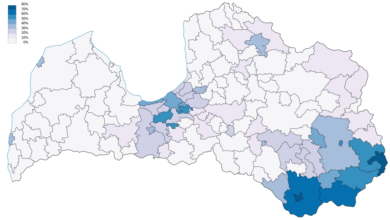
The Republic of Latvia is a country in Europe that belongs to the Baltic Region (together with Lithuania and Estonia), and whose capital is Riga. It has a population of 2 million inhabitants (148º) and an area of 64,589 km 2 (122º). Its human development index is very high (41st) and its official currency is the euro. And what language is spoken in Latvia? What language do they speak in Latvia? Latvia has one official language, Latvian. All other languages (with the exception of Livonian) are considered foreign languages in legal terms, despite the fact that Russian is the mother…
Read More » -
Latvia

History of Latvia
Brief history of Latvia summarized A brushstroke of the history of Latvia, to get to know the Baltic country a little better. Former latvia The first settlers in Latvia were stone age hunters and gatherers who arrived there after the last ice age, around 9000 BC However, the ancestors of today’s Latvians were Baltic tribes who migrated to the area around the year 2,000 BC In the 12th century AD some of the last pagans in Europe lived in Latvia. The Pope decided to convert them to Christianity by force. In 1201 he dispatched German crusaders commanded by the Bishop…
Read More » -
Traditions and customs of Latvia
What traditions and customs are there in Latvia? A look at the customs and traditions of Latvia, a Baltic country. Gastronomy Food in daily life The staples of the diet are rye, wheat, and potatoes. Dairy products are valued for their purity and healthful qualities. Milk, butter, sour cream, and cottage cheese were traditionally much appreciated additions to the diet. Pork meat is the most consumed. Smoked fish is particularly popular in Rīga and in coastal areas. A wide variety of bread is available in markets and shops. During the Soviet period, the main meal of the day was eaten…
Read More » -
History of Uruguay
Brief history of Uruguay summarized A brief brushstroke to the history of Uruguay, in a very summarized way. Uruguay in its beginnings In 1516 a Spaniard named Juan Díaz de Solís became the first European to arrive in Uruguay. In the 16th century the Spanish took Argentina while Portugal took Brazil. What is now Uruguay was among them, but its lack of mineral wealth meant that both nations took little interest in it for a long time. However, in 1726 the Spanish took Uruguay and founded Montevideo. In 1776 Uruguay became part of the royalty of La Plata. In 1811…
Read More »