-
Colombia

Colombian language
The Republic of Colombia is a country in South America, whose capital is Bogotá. It has a population of 50 million inhabitants (29th) and an area of 1,141,748 km 2 (25th). Its human development index is high (90º) and its official currency is the Colombian peso. And what language is spoken in Colombia? What language do they speak in Colombia? Colombia has an official language, Spanish. In addition, English is co -official in the Archipelago of San Andrés, Providencia and Santa Catalina. Likewise, the constitution designates as co-official the indigenous languages in their respective territories. Education in these territories is…
Read More » -
Colombian history
Brief history of Colombia summarized A brief look at the brief history of Colombia, the coffee country. Colombia in the beginning For thousands of years before the arrival of Europeans, Amerindians lived in what is now Colombia. Some lived by fishing and hunting, but others by farming. The first Spaniard to land in the area was Alonso de Ojeda in 1500. However, there was no permanent Spanish settlement until 1533, when Cartagena and Santa Marta were founded. Bogotá was founded in 1538. In 1564 Colombia was appointed captain general. The colony prospered and many African slaves were brought there. However,…
Read More » -
Traditions and customs of Colombia
What traditions and customs are there in Colombia? Large number of customs and traditions of Colombia, detailed here. Food in daily life Most middle-class families eat elaborate meals that reflect Spanish and indigenous traditions. A typical meal is identified by its size and not its content, such as a light breakfast, a substantial lunch at noon, and a lighter meal at the beginning of the evening. Dinner consists of fresh fruit, homemade soup and a main course with meat or fish accompanied by rice and/or potatoes. Low-income people eat a diet richer in carbohydrates. Meals usually end with a very…
Read More » -
Traditions and customs of Paraguay
What traditions and customs are there in Paraguay? The Guarani land shows us a great variety of customs and traditions of Paraguay. Gastronomy Food in daily life Corn, cassava (cassava), and beef form the staple diet. Typical dishes include locro (a corn stew), Paraguayan soup (a rich cornmeal and cheese bread), chipa guazú (a cross between Paraguayan soup and a corn soufflé), and mbaipy so’ó (corn pudding). with pieces of meat). Cassava root is commonly served boiled, and its starch is a main ingredient in several traditional foods, including chipa (a dense, baked bread of cassava starch and cheese) and…
Read More » -
Nicaraguan history
Brief history of Nicaragua summarized A brief look at the history of Nicaragua, in a summarized way. Nicaraguan Beginnings The agricultural revolution arrived in what is now Nicaragua around 400 BC Then, in 1502, Christopher Columbus landed on the Nicaraguan coast. However, Europeans did not explore the interior until 1522, when Gil González de Ávila led an expedition to the region. The following year 1523 the Spanish landed in force and founded León and Granada. The Spanish conquered Nicaragua and divided the land among themselves into large estates, which the natives were forced to work. In the 17th century, English,…
Read More » -
Traditions and customs of Nicaragua
What traditions and customs are there in Nicaragua? We will know the customs and traditions of Nicaragua. Gastronomy Food in daily life Nicaragua has a local cuisine that shares some flavors and ingredients with Mexican food, while also bearing a resemblance to the cuisines of Honduras and Guatemala. Corn and beans are the staples of the diet, and garlic and onions flavor most dishes. Like other Central Americans, Nicaraguans consume corn tortillas with most meals. The Nicaraguan version of the tortilla is large, thin, and made from white corn. It is used as an edible utensil to wrap meat and…
Read More » -
Nepal

Nepali language
The Federal Democratic Republic of Nepal is a country belonging to Asia, whose capital is Kathmandu. It has a population of 28 million inhabitants (49º) and its extension is 147,516 km2 (93º). Its human development index is medium (147th) and its official currency is the Nepalese rupee. But what language is spoken in Nepal? What language do they speak in Nepal? Nepal has one official language, Nepali. However, its constitution states the following: Article 6: All native languages spoken in Nepal are national languages of Nepal. Article 7b: In addition to the Nepali language, provinces may choose one or more…
Read More » -
Nepalese history
Brief history of Nepal summarized A brief review of the history of Nepal, an Asian country. The beginnings of Nepal Nepal was known to ancient Indians. He was mentioned in the classical literature of India. In the third century BC the great Indian emperor introduced Buddhism to Nepal. Nepal was also in contact with China. Around 200 AD a people called the Lichavis took power in Nepal. Under them Nepal flourished and great temples, both Hindu and Buddhist, were built. However, the Lichavis eventually declined and a new era began in 879 AD. They were replaced by a series of…
Read More » -
Mexico

Languages of Mexico
The United Mexican States are located in North America and its capital is Mexico City (formerly known as DF). It is the 11th most populous country in the world with 124 million inhabitants, and has an area of 1,972,550 km 2 (13th). And what language is spoken in Mexico? What language do they speak in Mexico? Mexico does not have any official language at the federal level. However, since 98% of the population speaks Spanish, this is the de facto language. This makes it the country with the most Spanish speakers in the world, ahead of the United States, Colombia,…
Read More » -
Mexico
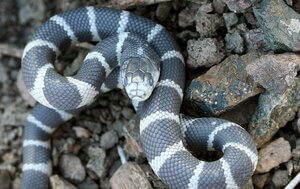
Flora and fauna of Mexico
Flora of Mexico Mexico’s plant life is very diverse, but in general, because there is less rainfall in the north and more in the south, Mexico’s trees and plants can be fairly divided along their topographical and geographic lines: desert plants in the north, forests and grasslands in the mountains and the central highlands, and jungle-like plants and trees in the south. Two deserts cover most of northern Mexico, the Chihuahuan desert, the largest of the North American deserts, and the Sonoran desert. Plants such as prickly pear, hawthorn acacia, lettuce, mesquite, and creosote cover the Chihuahuan desert. The Sonoran…
Read More »