Europe
-
Norwegian traditions and customs
What traditions and customs are there in Norway? We immerse ourselves in the customs and traditions of Norway, in Northern Europe. Gastronomy Food in daily life The food considered by many to be the most typically Norwegian is brown cheese which is thinly sliced with a cheese flat (a Norwegian invention) and eaten on bread. Breakfasts (frokost) generally consist of coffee, bread (including flat or crusty bread), pickled or smoked fish, deli meats, perhaps boiled eggs, and dairy products such as cheese, butter, yogurt, and varieties of sour milk. Breakfast can be more substantial than the midday meal (Monsj), which…
Read More » -
Italy
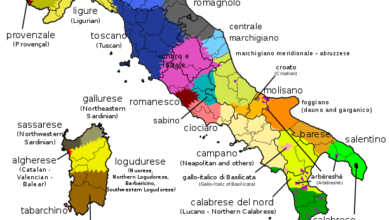
Italy language
The Italian Republic is a country belonging to Europe, whose capital is Rome. It has a population of 61 million inhabitants (23rd) and an area of 301,340 km 2 (71st). Its human development index is very high (28th) and its official currency is the euro. And what language is spoken in Italy? What language do they speak in Italy? Italy has one official language, Italian. However, the Italian country enjoys a wide variety of minority languages (many of them regional autochthonous); 12 are recognized and 4 of them are co-official at the regional level since 1999: Albanian (arbëreshë dialect) (100,000…
Read More » -
Italy

Flora and fauna of Italy
Flora of Italy Due to the long period of settlement in the Italian peninsula and the strong Roman culture, the natural vegetation and forests of Italy had been destroyed very early. Crops, pastures and vineyards replaced the natural vegetation. However, one of the hallmarks of contemporary Italy was established by man (olive groves, cypresses, pines, vineyards…). Beyond the three main plant species that are found almost everywhere in Italy (holly, cork oak and pine), the original vegetation has been preserved mainly in the more remote border areas and in Sardinia. It was estimated that the flora of Italy is composed…
Read More » -
Italy
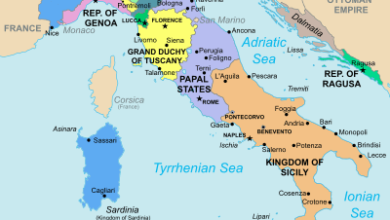
History of Italy
Brief history of Italy summarized In this brief historical review we present, in an entertaining way, the summary of the history of Italy, cradle of the Roman Empire. The Etruscans The origin of Italy’s history begins with its first civilization, the Etruscans, which arose around 800 BC in central Italy. The Etruscans built cities according to a grid pattern. Some of these cities still exist (such as Arezzo, Chiusi, Cortona, Perugia and Cerveteri). The Etruscans were also engineers who drained swamps and built roads. Furthermore, they were skilled artists. The Etruscans made terracotta sculptures and worked in bronze. Its artisans…
Read More » -
Italy

Italian music
Italian music includes all musical genres and repertoires composed on Italian territory from the earliest days of music to the 21st century. It covers traditional music from different regions of Italy, from classical music from the Middle Ages to contemporary music, including Italian opera, and different genres of popular music, from variety to techno to hip-hop. going through the rock Italy was, since the Middle Ages, the cradle of classical music with Guido d’Arezzo (musical notation) and Petrarca (the canzonieri of the troubadours), who each participated in their own way in its development. The madrigal of the Trecento and the…
Read More » -
Traditions and customs of Italy
What traditions and customs are there in Italy? A review of the customs and traditions of Italy, a European country. Gastronomy Food in daily life Food is a means of establishing and maintaining bonds between family and friends. No one who enters an Italian home should fail to receive an offering of food and drink. Typically, breakfast consists of a hard roll, butter, strong coffee, and fruit or juice. Traditionally, the midday meal consisted of a large lunch. In general, pasta was part of the meal in all regions, along with soup, bread, and perhaps meat or fish. Dinner consisted…
Read More » -
Iceland language
Iceland is a country belonging to Europe, whose capital is Reykjavík. It has a population of about 350,000 inhabitants (172º) and an area of 102,775 km 2 (106º). Its human development index is very high (6th) and its official currency is the Icelandic krona. But what language is spoken in Iceland? What language do they speak in Iceland? Iceland has one official language, Icelandic. Being such an isolated country, linguistically it is a very homogeneous country. Having been part of a union with Denmark, Danish was a minority language in Iceland. Currently, it is only spoken by a small number…
Read More » -
History of Iceland
Brief history of Iceland summarized A brief review of the history of Iceland, a European country, in a summarized way. Viking Iceland The first people to settle in Iceland were probably Irish monks who arrived in the 8th century. However, in the 9th century they were expelled by the Vikings. According to tradition, the first Viking to discover Iceland was a man named Naddoddur who got lost on his way to the Faroe Islands. After him, a Swede named Gardar Svavarsson circumnavigated Iceland around 860. However, the first Viking attempt to settle was by a Norwegian named Floki Vilgeroarson. He…
Read More » -
Spain

Languages of Spain
The Kingdom of Spain is a country belonging to Europe, whose capital is Madrid. It has a population of 47 million inhabitants (30th) and an area of 505,990 km 2 (51st). Its human development index is very high (26th) and its official currency is the euro. And what language is spoken in Spain? What language do they speak in Spain? Spain has an official language, Spanish (or Castilian). In addition, there are 6 autonomous communities where another 4 languages have been co-official since 1978: Catalan: in Catalonia, the Valencian Community and the Balearic Islands. Galician: in Galicia . Basque: in…
Read More » -
Spain
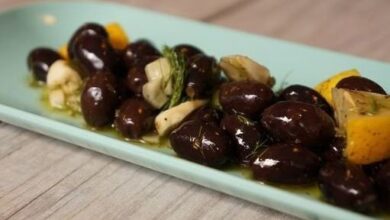
Typical food from Spain
Geographic setting and environment With Portugal, Spain forms the Iberian Peninsula, or Iberia. Iberia is separated from the rest of Europe by the Pyrenees mountains, which rise to a height of 3,404 meters. The peninsula is bordered by the waters of the Mediterranean Sea to the east, the Strait of Gibraltar to the south, the Atlantic Ocean to the west, and the Bay of Biscay to the northwest. Spain’s miles of coastline (more than any other European country) provide it with abundant seafood and fish. Spain is also a close neighbor of Africa. Morocco is a short distance – thirteen…
Read More »