Asia
-
History of Oman
Brief history of Oman summarized A look at the history of Oman, briefly. Oman Principles As early as 2,300 BC, Oman was recorded by the Sumerians of ancient Iraq as a rich source of copper. In ancient times, Oman was also a source of frankincense. After 500 BC, Oman was controlled by the Persian Empire based in what is now Iran. They were later ruled by other Iranian empires, the Parthians and the Sassanids. In the 7th century AD the people of Oman adopted Islam. At that point Iranian influence ended. In 1507 the Portuguese reached Oman by sea. The…
Read More » -
Lebanon

Lebanon language
The Lebanese Republic (Lebanon) is a country belonging to Asia, whose capital is Beirut. It has a population of 6 million inhabitants (112º) and an extension of 10,452 km 2 (161º). Its human development index is high (80º) and its official currency is the Lebanese pound. But what language is spoken in Lebanon? What language do they speak in Lebanon? Lebanon has one official language, Modern Standard Arabic. In addition, article 11 of its constitution dictates that ” A law determines the cases in which the French language must be used.” In education, 70% of secondary schools teach French as…
Read More » -
Traditions and customs of Lebanon
What traditions and customs are there in Lebanon? With this article we will understand the customs and traditions of Lebanon. Gastronomy Food in daily life Lebanese cuisine is Mediterranean. Pita bread is a staple food. Lebanese enjoy hummus (a chickpea dip), fool (a broad bean dip), and other bean dishes. Rice is almost a staple food and pasta is very popular. Salty yogurt is common in many dishes. Red meat and chicken are common, but are usually eaten as part of a dish. Pork is less popular as it is prohibited under Islamic law. Eating in Lebanon is tied to…
Read More » -
Vietnam

Vietnamese language
The Socialist Republic of Vietnam is a country in Southeast Asia, whose capital is Hanoi. It has a population of 95 million people (15th) and an area of 331,212 km 2 (65th). Its human development index is medium (116th) and its official currency is the Vietnamese dong. And what language is spoken in Vietnam? What language do they speak in Vietnam? Vietnam only has one official language, Vietnamese. Despite the fact that French was the foreign language that dominated, it has now given way to English, which is the language that has commercial and tourist influence. Thus, English is the…
Read More » -
Mongolian history
Brief history of Mongolia summarized A look at the brief history of Mongolia, in a summarized form. Mongolia in its early days In 209 BC a great leader named Modun united the people of Mongolia. This primitive state was called Hunnu. The Hunnu were a powerful empire and were often at war with China. However, the Hunnu state was dissolved in the 4th century AD From the 6th to the 9th centuries, tribes speaking Turkic languages dominated Mongolia. Then, in 1162, the most famous person in Mongolian history was born. Her name was Temujin. He soon proved to be a…
Read More » -
Maldives
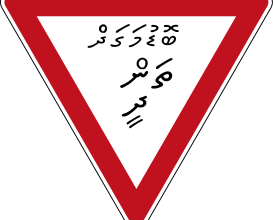
Maldives language
The Republic of Maldives is an Asian island country, whose capital is Malé. It has a population of approximately 400,000 inhabitants (175º) and an area of 298 km 2 (187º). Its human development index is high (101st) and its official currency is the Maldivian rupee. And what language is spoken in the Maldives? What language do they speak in Maldives? Maldives has one official language, which is Maldivian (or Divehi). In ancient times, Elu was spoken, which is related to the Sinhalese spoken in Sri Lanka. After a large number of transformations, the result was the Maldivian language. English is…
Read More » -
Mongolian traditions and customs
What traditions and customs are there in Mongolia? Overview of the customs and traditions of Mongolia. Gastronomy Food in daily life Approximately twenty-five million head of cattle supply the staples of the diet; meat and dairy products figure prominently in this cuisine. Mongolian cuisine is generally very simple and does not use many spices, flavors, or sauces. Common dishes include steamed meat dumplings (buuz), lamb noodle soup (guriltai shul), and fried meat dumplings (huushuur). Mongolians drink copious amounts of milk tea (“suutei tsai”), which often contains salt and a generous spoonful of fresh or rancid butter. Food customs on ceremonial…
Read More » -
Kuwaiti traditions and customs
What traditions and customs are there in Kuwait? We will see what are the customs and traditions of Kuwait. Gastronomy Food in daily life After centuries of living as nomads, surviving on subsistence farming and ranching, the relatively recent rise in income of many Kuwaitis has led to a rapid increase in the relative obesity of the general population. Still operating under the precept that fat children are healthy, Kuwaitis eat a very rich diet and do not exercise as in the past. The change from a nomadic to a sedentary lifestyle occurred rapidly with industrialization and urbanization, coinciding with…
Read More » -
Jordan

History of Jordan
Brief history of Jordan summarized A look at the brief history of Jordan, an Asian country. Jordan Principles Before 8,000 BC stone age hunters lived in what is now Jordan. However, around 8,000 BC in the region they began to farm, although they still used stone tools. People began to live in villages. Around 5,000 BC in Jordan they were making pottery. Around 4,000 BC they smelted copper and around 3,200 BC they learned to make bronze tools. During the bronze age, many people in Jordan lived in fortified cities. At that time there was a large trade between Egypt…
Read More » -
Traditions and customs of Jordan
What traditions and customs are there in Jordan? From the ancient city of Petra, the customs and traditions of Jordan. Gastronomy Food in daily life An ancient legend tells of an Arabian shepherd who six thousand years ago put his supply of milk into a bag made from the stomach of a sheep before making a journey across the desert. The rennet in the lining of the bag, combined with the heat of the sun, caused the milk to form curds, and cheese was discovered. Bedouin farmers keep herds of goats and sheep whose milk is used to produce cheese…
Read More »