-
Canada

Canadian typical food
Geographic setting and environment Canada is the second largest country in the world (after Russia), and is the largest country in North America. The eastern provinces, known as the Maritimes, are separated from the rest of the country by low mountain ranges. Newfoundland and Prince Edward Island are island provinces in the Atlantic Ocean. Along the border with the United States in central Canada is a fertile plain bounded by the St. Lawrence River, Lake Ontario, and Hudson Bay. Also along the border with the United States, further west, there are farms and ranches. Stretching across western Alberta to the…
Read More » -
Canada

Flora and fauna of Canada
Flora of Canada A great variety of plant and animal life characterizes the vast area of Canada, with its varied geographic and climatic zones. The flora of the Great Lakes-St. Lawrence region resembles that of the adjacent American section, with white pine, hemlock, sugar and red maples, yellow birch, and beech trees. The maritime region is dominated by conifers, especially red spruce, black spruce in the eastern Laurentian, and white spruce in the western. Balsam fir, white cedar, tamarisk, white birch, and aspen are also found in the east, with Aleppo pine in drier areas. From prairie to arctic tundra…
Read More » -
Canada
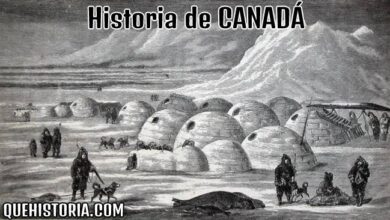
Canada’s history
Brief history of Canada summarized A brief journey through the history of Canada, in a clear and summarized way. The discovery of Canada The first people in Canada crossed the Bering Strait from Asia. In the north, the Inuit lived by hunting seals, walruses, and whales. They also hunted caribou. On the West Coast, people hunted deer, bear, and beaver. They also fished. On the plains people lived by hunting buffalo. In the east people grew beans, squash, corn, and sunflower seeds. The first Europeans to arrive in Canada were the Vikings. In 986 a Viking named Bjarni Herjolfsson was…
Read More » -
Canada

Music of Canada
The music of Canada has reflected the various influences that have shaped the country. Indigenous peoples, the Irish, the British and the French have all made unique contributions to Canada’s musical heritage. The music has been heavily influenced by American culture due to the proximity and migration between the two countries. Since the French explorer Samuel de Champlain arrived in 1605 and established the first permanent Canadian settlements in Port Royal and Québec in 1608, the country has produced its own composers, musicians and ensembles. The Canadian music industry is the sixth largest in the world, producing many internationally renowned…
Read More » -
Traditions and customs of Canada
What traditions and customs are there in Canada? The customs and traditions of Canada, explained here below. Gastronomy Food in daily life Canada’s agricultural and ethnic wealth has led to two distinctive features of daily food consumption. The first is its scale. Canadians are “heavy eaters,” with meat portions in particular dominating Canadian food. There are usually three regular meals on a given day. Breakfast, which is usually large and important in rural areas, but not so much in urban areas, is not usually eaten in a group. Lunch, at noon, is usually a snack in urban areas, but it…
Read More » -
Cameroon
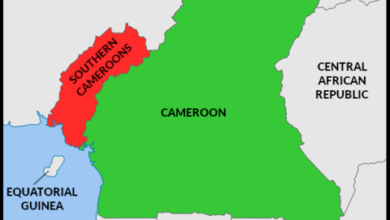
Cameroon language
The Republic of Cameroon is a country that belongs to Africa, whose capital is Yaoundé (the most populous city is Douala). It has a population of more than 24 million inhabitants (56th) and an area of 475,442 km 2 (53rd). Its human development index is medium (151º) and its official currency is the CFA Franc of Central Africa. And what language is spoken in Cameroon? What language do they speak in Cameroon? Cameroon has two official languages: French , spoken by 40% of the population. English , which is spoken by 31.3% of its inhabitants. The Cameroonian government encourages bilingualism,…
Read More » -
Traditions and customs of Cameroon
What customs and traditions are there in Cameroon? A brief review of the traditions and customs that exist in this country, Cameroon. Feeding Food in daily life Sharing cooked food is one of the main ways to cement social relationships and express the high value placed on human company. Sharing food and drink demonstrates hospitality and trust. Social support networks among relatives and friends, particularly among peasants and urban relatives, are symbolically held together by gifts of cooked and uncooked food. Sacks of beans, corn or peanuts “from home” can be seen on the roofs of taxis traveling between the…
Read More » -
Cambodia

Cambodia language
The Kingdom of Cambodia is a country in Southeast Asia, whose capital is Phnom Penh. It has a population of more than 16 million inhabitants (70º), and an extension of 181,035 km 2 (88º). Its human development index is medium (146º) and its official currency is the Cambodian riel. But what language is spoken in Cambodia? What language do they speak in Cambodia? Cambodia has one official language, Cambodian (also known as Khmer). As for foreign languages, French had always dominated this section until 1993, when the use of English began to grow, replacing French as the main foreign language.…
Read More » -
History of Cambodia
Brief history of Cambodia A brief review of the summarized history of Cambodia, a country in Southeast Asia. Ancient Cambodia Cambodia has a rich and fascinating history. The earliest humans in Cambodia were Stone Age hunters and gatherers. However, agriculture was introduced to Cambodia around 2,300 BC. Early Cambodian farmers used stone tools, but from 1500 BC Cambodians used tools and weapons made of bronze. By 500 BC they had already learned to use iron. The first civilization in the area arose around 150 AD in the Mekong River Delta in South Vietnam. This civilization was known by the Chinese…
Read More » -
Cambodian traditions and customs
What traditions and customs are there in Cambodia? We will get to know the customs and traditions of Cambodia, in Southeast Asia. Gastronomy Food in daily life The staple foods are rice and fish. Traditionally, a home-cooked meal is served on a mat on the floor or with diners sitting together on a raised bamboo platform. Meals are eaten in shifts according to status, with the adult men and guests eating first and the food preparers afterwards. Breakfast typically consists of rice porridge or rice noodles. Lunch and dinner can be a combination of a broth seasoned with fish or…
Read More »