America
-
Panama language
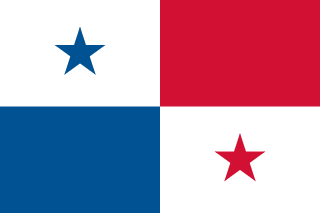
The Republic of Panama is a country that belongs to Central America, whose capital is Panama. It has a population of 4 million, being the 130th most populous in the world, and an area of 75,417 km 2 (116th). Its human development index is high (60º) and its official currency is the Panamanian balboa. But what language is spoken in Panama? What language do they speak in Panama? Panama has an official language since the 1972 constitution, Spanish, spoken by 93% of the population, is also the national language. From its discovery until the middle of the 18th century, the…
Read More » -
History of Honduras
Brief history of Honduras summarized A quick and brief review of the history of Honduras, a Central American country, in a summarized way. Honduran beginnings For thousands of years indigenous peoples lived in Honduras. The greatest of them were the Mayans. However, the first European to reach Honduras was Christopher Columbus on July 30, 1502. Columbus later sailed to Panama. The area became known as Honduras from the Spanish word honduras (depths). The Spanish conquest of Honduras began in 1523. The indigenous people resisted bitterly, but by 1539 the Spanish took control. The natives were forced to work for the…
Read More » -
Costa Rica History
Brief history of Costa Rica summarized A brief brushstroke on the history of Costa Rica summarized. Costa Rica in its beginnings At the beginning of the 16th century, the indigenous people of Costa Rica divided into farming tribes. They had created a sophisticated society. However, on September 18, 1502, Christopher Columbus sighted Costa Rica. In the mid-16th century the Spanish gradually conquered Costa Rica. However, there was no gold. Its population was small and much less important than the other Spanish colonies. In addition, the indigenous population was devastated by European diseases that they did not resist. The first Spanish…
Read More » -

Chile language
The Republic of Chile is a country that belongs to South America, whose capital is Santiago. It has a population of about 19 million inhabitants (64th) and an area of 756,096 km 2 (37th). Its human development index is very high (44º) and its official currency is the Chilean peso. But what language is spoken in Chile? What language do they speak in Chile? Chile does not have any official language. However, Spanish is the de facto national language. In addition, various indigenous languages are spoken in Chile, which are: Mapudungun (250,000 speakers), Aymara (19,000), southern Quechua (6,180), Rapanui (1,000),…
Read More » -
Chile’s history
Brief history of Chile summarized A general look at the history of Chile, in a brief and summarized way. Chilean Beginnings The first humans arrived in Chile around 12,000 BC At first, people lived by hunting and farming, but in the north of Chile they were engaged in agriculture in 2,500 BC However, agriculture began much later in the South of Chile. The Incas conquered northern Chile in the 15th century, but were also conquered by the Spanish in 1533. However, in the south there was a people called the Araucanos. In 1540 a Spaniard named Pedro de Valdivia invaded…
Read More » -
Traditions and customs of Chile
What traditions and customs are there in Chile? We will see what are the customs and traditions of Chile, a South American country. Gastronomy Food in daily life Food has a very special place in Chilean culture. Chileans normally eat four times a day. The first meal of the day is breakfast, which is mostly a light meal including buttered toast and instant coffee with milk. Lunch (served between 1:00 and 2:00 PM) is the big meal of the day. Two main dishes are traditionally served. The first course can be a salad of some kind. A common salad is…
Read More » -
Languages of Canada
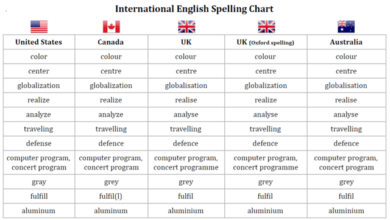
Canada is a country that belongs to North America and whose capital is Ottawa (and not Toronto as many people believe). It is the 2nd largest country in the world (9,984,670 km 2), only behind Russia. In terms of population, it drops to 38th place, with some 36 million inhabitants. Its human development index is very high (ranked 10th) and its official currency is the Canadian dollar. And what language is spoken in Canada? What language do they speak in Canada? The state of Canada has had two official languages since 1969, which are the following: English , which is…
Read More » -

Canadian typical food
Geographic setting and environment Canada is the second largest country in the world (after Russia), and is the largest country in North America. The eastern provinces, known as the Maritimes, are separated from the rest of the country by low mountain ranges. Newfoundland and Prince Edward Island are island provinces in the Atlantic Ocean. Along the border with the United States in central Canada is a fertile plain bounded by the St. Lawrence River, Lake Ontario, and Hudson Bay. Also along the border with the United States, further west, there are farms and ranches. Stretching across western Alberta to the…
Read More » -

Flora and fauna of Canada
Flora of Canada A great variety of plant and animal life characterizes the vast area of Canada, with its varied geographic and climatic zones. The flora of the Great Lakes-St. Lawrence region resembles that of the adjacent American section, with white pine, hemlock, sugar and red maples, yellow birch, and beech trees. The maritime region is dominated by conifers, especially red spruce, black spruce in the eastern Laurentian, and white spruce in the western. Balsam fir, white cedar, tamarisk, white birch, and aspen are also found in the east, with Aleppo pine in drier areas. From prairie to arctic tundra…
Read More » -
Canada’s history
Brief history of Canada summarized A brief journey through the history of Canada, in a clear and summarized way. The discovery of Canada The first people in Canada crossed the Bering Strait from Asia. In the north, the Inuit lived by hunting seals, walruses, and whales. They also hunted caribou. On the West Coast, people hunted deer, bear, and beaver. They also fished. On the plains people lived by hunting buffalo. In the east people grew beans, squash, corn, and sunflower seeds. The first Europeans to arrive in Canada were the Vikings. In 986 a Viking named Bjarni Herjolfsson was…
Read More »