History
-
Israeli history
The Jewish people The people of Israel (also called the “Jewish people”) trace their origin to Abraham, who established the belief that there is only one God, the creator of the universe. Abraham, his son Isaac (Isaac), and his grandson Jacob (Israel) are known as the patriarchs of the Israelites. All three patriarchs lived in the Land of Canaan, which later became known as the Land of Israel. They and their wives are buried in the Ma’arat HaMachpela, the Tomb of the Patriarchs, in Hebron (Genesis Chapter 23). Israel’s name derives from the name given to Jacob (Genesis 32:29). His…
Read More » -
History of Iceland
Brief history of Iceland summarized A brief review of the history of Iceland, a European country, in a summarized way. Viking Iceland The first people to settle in Iceland were probably Irish monks who arrived in the 8th century. However, in the 9th century they were expelled by the Vikings. According to tradition, the first Viking to discover Iceland was a man named Naddoddur who got lost on his way to the Faroe Islands. After him, a Swede named Gardar Svavarsson circumnavigated Iceland around 860. However, the first Viking attempt to settle was by a Norwegian named Floki Vilgeroarson. He…
Read More » -
Spain
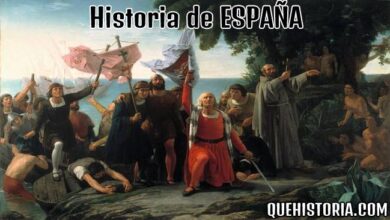
History of Spain
Brief history of Spain summarized A brief and enjoyable review of the long history of Spain. Old spain Starting in 900 BC, a seafaring people called the Phoenicians who came from what is now Lebanon traded with what is now Spain. They founded a chain of trading settlements along the coast, on islands and peninsulas. The Iberians gave the Phoenicians silver in exchange for wine and olive oil, as well as jewelry. The people of Spain were highly influenced by the Phoenician culture. The Greeks also traded with Spain, the Iberians were also influenced by Greek culture. A Phoenician colony…
Read More » -
History of Slovenia
Brief history of Slovenia summarized A brief review of the summarized history of Slovenia, a European country. Slovenian Principles Around 3,500 stone age farmers lived in what is now Slovenia. The bronze age followed from 750 BC the iron age. Then, around 400 BC, the Celts settled in Slovenia. They formed the state of Noricum. However, in 10 BC the Romans conquered Slovenia. Under Roman rule, Slovenia prospered and cities such as Emona (Ljubljana), Celeia (Celje), and Poetovio (Ptuj) were founded. However, Roman rule collapsed in the 5th century AD In the 6th century AD the Slavs arrived in Slovenia.…
Read More » -
History of Scotland
Brief history of Scotland summarized A brief and pleasant review of the history of Scotland summarized. Ancient Scotland During the ice age, Scotland was uninhabited. However, when the ice melted the forests that spread across Scotland and stone age hunters moved there. In 6,000 BC, small groups of people lived in Scotland hunting animals such as red deer and seals and gathering plants for food. Then around 4,500 BC farming was introduced to Scotland. Early farmers continued to use stone tools and weapons and this period is called the Neolithic (new stone age). Neolithic people used stone or fire axes…
Read More » -
History of Egypt
Brief history of Egypt summarized A brief journey through the history of Egypt, from Ancient Egypt to the present day. Ancient Egypt By 5,000 BC the people of Egypt had begun farming. They also weaved linen and made pottery. Later they learned to wear bronze. Around 3,200 BC the Egyptians invented writing. The first Egyptian in history was King Menes, alias Narmer, who lived shortly before 3,100 BC. At that time Egypt was divided into the north (lower) and the south (upper). Around 3118 Menes managed to unite the two. He made Memphis his capital. Ancient Egypt was a highly…
Read More » -
History of Ecuador
Brief history of Ecuador summarized A brief tour of the summarized history of Ecuador, a South American country. The beginnings of Ecuador The natives of Ecuador grew corn, beans, potatoes, and squashes. They kept dogs and guinea pigs for meat. Many of them were potters and metallurgists skilled in gold, silver and copper. However, at the end of the XV century they were conquered by the Incas. The Spanish first sighted the coast of Ecuador in 1526 and were soon reconquered. The Spanish conquered what is now Ecuador in 1534. The Spanish had already conquered the Incas in what is…
Read More » -
Denmark

History of Denmark
Brief history of Denmark summarized A simple summary of what is the history of Denmark through the centuries. Old Denmark The first humans in Denmark arrived around 10,000 BC, after the end of the last Ice Age. The first Danes were Stone Age hunters and fishermen. Around 4,000 BC agriculture was introduced to Denmark. Early Danish farmers used stone tools and weapons. Around 1,800 BC bronze was introduced to Denmark. Danish craftsmen soon became adept at making bronze wares. Around 500 BC, iron was introduced into Denmark. Iron Age Danes had contact with the Romans. They sold slaves, furs, hides…
Read More » -
History of Belize
Brief history of Belize summarized A brief review of the history of Belize, in a summarized way. Belize in its early days The Mayans created a great civilization in what is now Belize. The ancestors of the Mayans were hunters, but around 2,000 BC they adopted agriculture as a way of life. In the years 300 BC to 250 AD, organized Mayan kingdoms arose. Then, from 250 to 600 AD, an advanced civilization emerged. The Mayans invented writing and made great advances in astronomy and mathematics. The Mayan civilization was at its height between 600 and 900 AD However, after…
Read More » -
History of Belgium
Brief history of Belgium summarized A brief and pleasant walk through the history of Belgium, a country without its own language, adopting Flemish and French. Ancient Belgium The Romans conquered Belgium in 57 BC and it became part of the Roman Empire as Gallia Belgica. However, in the 5th century AD, Roman rule collapsed and the Franks conquered Belgium. Its first capital was at Tournai. In the 9th century the Franks ruled most of Western Europe. However, his empire was also broken. Then, in the 11th century, Flanders (roughly modern Belgium) emerged as a powerful semi-independent kingdom. It also became…
Read More »