Europe
-
Hungary

History of Hungary
Brief history of Hungary summarized A brief overview of the history of Hungary, whose capital is Budapest. Ancient hungary During the last ice age, humans in Hungary lived by hunting mammoths and reindeer with stone weapons. When the ice age ended, they hunted smaller animals. However, around 5,000 BC they were introduced to Hungary, although stone tools were still used by farmers. Then around 2,000 BC they learned to use bronze. Around 800 BC in Hungary they learned to make iron tools and weapons. After 500 BC they traded with the Greeks. They also learned to use the potter’s wheel.…
Read More » -
Hungarian traditions and customs
What traditions and customs are there in Hungary? Let’s get to know the customs and traditions of Hungary. Gastronomy Food in daily life Magyar kenyér (Hungarian bread) is still very important in rural and urban cuisine. For the last hundred and fifty years, wheat has been one of the most important crops for both domestic use and export. Pig farming became the most important type of animal husbandry in the 1870s, and since then the meat and by-products of pigs have dominated the national diet. Food customs on ceremonial occasions Cuisine at most village weddings includes chicken soup with special…
Read More » -
Traditions and customs of Vatican City
What traditions and customs are there in Vatican City? A brief review of the traditions and customs that inhabit the papal country, Vatican City. Food and economy Food in daily life The most important style of food is that of Rome. Like other Italians, Vatican residents consider their cuisine to be the best in the world. Pope John Paul II caused a furore when he requested Polish cuisine from the papal chef. Food customs on ceremonial occasions On New Year’s Eve, the Italian tradition is to eat all seven fish, including eels, conches, and squid. Lamb is a traditional Easter…
Read More » -
Germany

Germany language
The Federal Republic of Germany is a country in Europe, whose capital is Berlin. It has a population of 83 million inhabitants (17th) and an area of 357,386 km 2 (62nd). Its human development index is very high (5th) and its official currency is the euro. And what language is spoken in Germany? What language do they speak in Germany? Germany has one official language, German. In addition, the government recognizes some minority languages, which are Danish (24,900 speakers), Low German, Upper Sorbian (13,300), Lower Sorbian (6,670), Romani (80,000), and Frisian languages (10,000). These languages are officially protected by the…
Read More » -
Germany

Typical food of Germany
Geographic setting and environment Germany is located in Western Europe. The country’s topography is varied, including regions of deep forest and high mountains, as well as a wide valley surrounding the Rhine, Germany’s largest river. The highest peak of the mountain, the Zugspitze, is located on the border with Austria. Less than 3 percent of Germans are farmers, and the country must import much of its food. Apples, pears, cherries and peaches, as well as grapes for wine production, are important crops in Germany. History and food Food has always been an important part of German culture. Even the well-known…
Read More » -
Germany
Flora and fauna of Germany
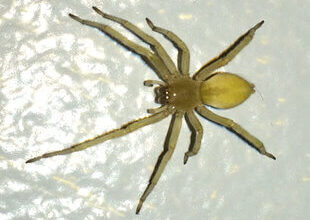
Flora of Germany Before human colonization, the surface of today’s Germany was almost exclusively forested; the few non-forest habitats (apart from water bodies) included paramos, river meadows, and high mountain regions. Today, the natural vegetation is largely destroyed. Forests that have little to do with the original natural forests. The flora of Germany comprises about 3,000 species of flowering plants and about 4,000 cryptogamic plants. However, the country does not form a single natural region and cannot be distinctively characterized by any of the main botanical types. The largest forest proportions are found in Bavaria and Baden-Württemberg. Approximately two thirds…
Read More » -
History of Germany
Brief history of Germany summarized A brief tour of the history of Germany, a European country, in a summarized way. Old Germany Around the year 55 BC Julius Caesar conquered the Roman province of Gaul. He made the Rhine the border of the new province. It was a natural defensive barrier. Later the Romans also chose the Danube as their border. They also created a ditch and earthen bank with a wooden palisade on top from the Rhine to the Danube. In AD 9 the people who lived beyond the Rhine inflicted a crushing defeat on the Roman army in…
Read More » -
Traditions and customs of Germany
What traditions and customs are there in Germany? Explanation of the customs and traditions of Germany, a European country. Gastronomy Food in daily life Eating habits in Germany vary by social class and environment, but it is possible to generalize about the behavior of the inclusive middle class, which has emerged in the prosperous post-war era. Most Germans buy food both in supermarkets and in specialized stores, such as bakeries and butchers. Bread is the main food for both breakfast and dinner. Breakfast usually includes brötchen, or rolls of various kinds, while dinner, called Abendbrot, usually consists of bread, sausage…
Read More » -
Albania

Albanian language
The Republic of Albania is a country belonging to the Balkans, in Europe, whose capital is Tirana. It has a population of 3 million inhabitants (126º) and an extension of 28,748 km 2 (140º). Its human development index is high (68th) and its official currency is the Albanian lek. But what language do they speak in Albania? What language do they speak in Albania? Albania has only one official language, Albanian. This is spoken by almost the entire population (98.7%). As minority languages, 2 stand out: Greek (spoken by 0.5% of the population) and Macedonian (0.2%).Other minority languages are Aromanian,…
Read More » -
Albanian history
Brief history of Albania summarized We briefly delve into the history of Albania, a small coastal region in the Balkans, neighboring Greece. Ancient Albania The people of Albania learned to use bronze around 2,100 BC Then around 1,000 BC they learned to use iron. The Iron Age people of Albania are called the Illyrians. The Illyrians came into conflict with Rome and were conquered by the Romans in 167 BC Under Roman rule, Albania prospered. The Romans built roads in the area and towns like Elbasani grew. However, in the year 395 the Roman Empire was divided into two parts,…
Read More »