Europe
-
Traditions and customs of Greece
What traditions and customs are there in Greece? An overview of the customs and traditions of Greece. Gastronomy Food in daily life Grains, grapes, and olives are essential in the diet, supplemented by eggs, cheese, yogurt, fish, lamb, goat, chicken, rice, and fruits and vegetables. Certain foods are emblematic of national identity, such as moussaka, baklava, thick coffee, and resinated wine (“retsina”). Coffee shops have long functioned as daily meeting places for men. Dining out has grown in popularity, with a corresponding increase in the number and variety of restaurants. Food customs on ceremonial occasions Guests should always be offered…
Read More » -
Gibraltar traditions and customs
What traditions and customs are there in Gibraltar? The rock of Gibraltar has been disputed between the Spanish and the English for centuries. Here we briefly review what their customs and traditions are. Food and economy Food in daily life The food is a British-Mediterranean mix with strong roots in Spanish, Italian, English and Jewish cuisine. There are no general food taboos within the different religious groups. Eating Customs on Ceremonial Occasions La Calentita, a chickpea tart of Genoese origin, is the national dish. Basic Economy Until recently, the local economy depended on the military economy and smuggling (mainly tobacco).…
Read More » -
Estonia
Estonian history
Brief history of Estonia summarized An entertaining journey through the history of Estonia, the northernmost Baltic country, and with strong ties to Finland. Old Estonian The Estonians are a Finno-Ugric people related to the Finns. A first century Roman writer named Tacitus mentioned the Estonians. He called them the Aesti. Amber was exported from Estonia to other parts of Europe. Despite this, for centuries the Estonian tribes had little contact with Western civilization. They often traded goods and items with the Vikings. Between the 11th and 12th centuries, the Estonians fought several times against the Russians and remained undefeated. Then…
Read More » -
Estonian traditions and customs
What traditions and customs are there in Estonia? An overview of the Baltic country of Estonia and its customs and traditions. Food and economy Food in daily life In autumn and winter, soups and stews predominate, with potatoes being a staple in most meals. In spring and summer, fresh tomatoes and cucumbers accompany every meal. Sandwiches are a common breakfast food, and coffee is frequently enjoyed throughout the day and at social events. In coastal areas fish is eaten. Many people grow fruits, vegetables, and berries during the summer and can make what is left over in the fall. Family…
Read More » -
Serbian history
Brief history of Serbia summarized A brief review of the history of Serbia, in a summarized way Ancient Serbia In the 7th century, the Slavs, ancestors of modern Serbs, came to Serbia. At first they were divided into clans, but in the 8th century a man named Vastimir founded the first Serbian state called Rasica. Then, in the 9th century, the Serbs converted to Christianity. However, until the 13th century Rasica was a vassal of the Byzantine Empire. The 13th and 14th centuries were the golden age of Serbia. Its population grew and industries such as mining flourished. Serbia also…
Read More » -
Traditions and customs of Serbia
What traditions and customs are there in Serbia? Before part of Serbia and Montenegro, we see the customs and traditions of Serbia. Gastronomy Food in daily life The staple foods of the Serbian diet are bread, meat, fruits, vegetables, and dairy products. Breakfast usually consists of eggs, meat, and bread, with a dairy paste called kajmak. Lunch is the main meal of the day and is usually eaten around three in the afternoon. A light dinner is eaten around 8:00 PM Bell peppers are a common ingredient in many dishes. The national dish, called cevapcici, are small meat burgers, highly…
Read More » -
Russia

Russian language
The Russian Federation is a country belonging to Europe and Asia, whose capital is Moscow. It has a population of 147 million inhabitants (9th) and an area of 17,098,246 km 2 (the largest country in the world). Its development index is very high (49th) and its official currency is the ruble. But what language is spoken in Russia? What language do they speak in Russia? Russia has one official language, Russian. However, each Russian republic has the right to decide its own official languages, along with Russian: Idiom Number of speakers in Russia Republic Abaza 37,800 Karachay-Cherkessia I added 117,500…
Read More » -
Russia

Russian typical food
Geographic setting and environment Russia is the largest country in Europe, with 17 million square kilometers. It is 1.8 times the size of the United States. The Russian land stretches to the Arctic Ocean in the north. Russia shares borders with China and Mongolia to the south, and Ukraine, Latvia, Belarus, Lithuania, and Finland to the west. About three-quarters of the land is arable (capable of being cultivated), although farm output declined during the 1980s and 1990s. After the Union of Soviet Socialist Republics (USSR) seceded in 1991, the Russian government started a program to encourage small farmers. In the…
Read More » -
Russia

Flora and fauna of Russia
Flora of Russia Russia has various soil and vegetation zones, each with its characteristic flora and fauna. The northernmost is the so-called arctic desert zone, which includes most of the islands of the Arctic Ocean and the coast of the Taymyr Peninsula. These areas are characterized by the almost total absence of vegetation cover; only mosses and lichens are found. The tundra, which stretches across the northern tip of Asia, is divided into arctic, mossy lichen, and shrubby tundra subzones. Only dwarf birches, willows, lichens and mosses grow in the thin layer of acidic soil. To the south of the…
Read More » -
Russia
History of Russia
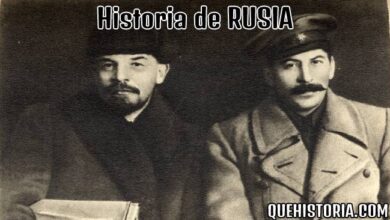
Brief history of Russia summarized Land of tsars and vodka, we delve into the exciting history of Russia. Russia in the Middle Ages At the beginning of the 9th century, Russia was inhabited by Slavic tribes. In the late 9th century the Vikings forged them into a nation centered on kyiv (the Vikings first captured Novgorod in 862 and kyiv in 882). The new nation was called Rus, and over time its Viking rulers adopted native customs and language. They were assimilated into Russian society. Kievan Rus’ was a powerful nation and traded with the Byzantine Empire. The Russians exported…
Read More »