Austria
-
Austria
Austrian language
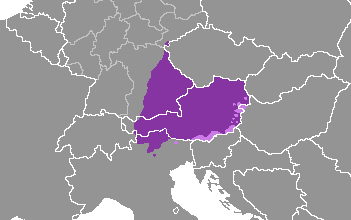
The Republic of Austria is a country belonging to Europe, whose capital is Vienna. It has a population of 9 million inhabitants (96º) and an area of 83,879 km 2 (113º). Its human development index is very high (20º) and its official currency is the euro. But what language is spoken in Austria? What language do they speak in Austria? Austria has one official language, Standard Austrian German. However, the most widely spoken language is Austro-Bavarian, which is predominant throughout the country (with the exception of Vorarlberg, where Alemannic is predominant). These three languages mentioned, grouped as languages or dialects…
Read More » -
Austrian history
Brief history of Austria summarized A brief review of the history of Austria, a country with certain links to Germany. Middle Ages From the fourth century BC the Celts lived in present-day Austria. At the end of the 1st century BC the Romans conquered the region up to the Danube and in 45 AD they created the province of Noricum. The Romans built cities like Vindobona (Vienna) in Austria. They also built roads and introduced the Roman way of life. However, beginning in the fourth century AD, waves of tribesmen, including Germans and Avars, invaded Austria. Then Charlemagne, King of…
Read More » -
Austrian traditions and customs
What traditions and customs are there in Austria? A glimpse into the customs and traditions of Austria, a country in Central Europe. Food in daily life Austrian cuisine is one of the most varied in Europe, including German, Hungarian, Czech, and Northern Italian influences. A typical Austrian day begins with a light breakfast of coffee or milk with bread and butter or jam. Sausage served with mustard on a stale roll is a typical mid-morning snack. Lunch is usually the main meal of the day and consists of soup and a main course of sausage, the very popular Wiener schnitzel…
Read More » -
History of Vienna
Brief history of Vienna summarized Brief summary of the history of Vienna, going back to Habsburg and Babenberg times, or even further back, when the Romans founded their Vindobona. Prehistoric times Archaeological artifacts found in and around the city are proof that the area was already populated during the Neolithic (the most famous sculpture is the Venus von Willendorf dating from 25,000 BC). A favorable climate and fertile soil, as well as the nearby Danube River, supported these settlements. Celts and Romans Around 500 BC a fortified Celtic settlement was founded on the premises of present-day Vienna, known as Vedunia.…
Read More »