America
-
History of Brasil
Brief history of Brazil summarized A brief tour of the summary of the history of Brazil, a South American country, in the form of a historical review. Indigenous peoples in brazil The history of Brazil begins when the first human beings came from the north after 10,000 BC They were hunter-gatherers. Among other animals they hunted manatees. They also fished in the rivers and near the coasts they gathered shellfish. The first Brazilians also collected plants. After 1000 BC, some people in Brazil were changing to an agricultural lifestyle. Agriculture practiced slash and burn. In other words, they cut down…
Read More » -
Traditions and customs of Brazil
What traditions and customs are there in Brazil? We discover the customs and traditions of Brazil, in South America. Gastronomy Food in daily life Rice, beans, and cassava form the core of the Brazilian diet and are eaten at least occasionally by all social classes in all parts of the nation. Cassava is a root crop typically consumed as farinha, cassava flour sprinkled over rice and beans, or cassava flour, cassava flour, sautéed in a little oil with onions, eggs, olives, or other ingredients. Meat, poultry or fish are added to this nucleus, but the frequency of their consumption is…
Read More » -
Bolivia

Bolivian language
The Plurinational State of Bolivia is a country that belongs to South America, whose capitals are Sucre and La Paz. It has a population of more than 11 million people (83rd) and an area of 1,098,581 km 2 (27th). Its human development index is medium (118º) and its official currency is the Boliviano. And what language is spoken in Bolivia? What language do they speak in Bolivia? Bolivia has up to 37 official languages, which are the following: Idiom Number of speakers ethnic population Aymara 1,677,100 – Araona 110 160 Baure 67 980 besiro 4,620 47,100 canichana 0 1,550 Spanish…
Read More » -
Bolivia

Flora and fauna of Bolivia
Bolivian Flora The botanical exploration of Bolivia during the last two centuries did not leave a botanical legacy in the country. Only towards the end of the 20th century did Bolivia see the beginning of biology courses in its universities and the development of its own herbaria. Today there are important herbaria in La Paz, Santa Cruz, Cochabamba and Sucre with collections ranging between 40,000 and 350,000 specimens. In 2014, under the patronage of the Missouri Botanical Garden, a catalog of the vascular flora of Bolivia was published, in which 15,345 species are recorded, of which 12,165 are native and…
Read More » -
Bolivian history
Brief history of Bolivia summarized A brief review of the history of Bolivia summarized, a South American country. Bolivia in ancient times The people of Bolivia were civilized for hundreds of years before the Spanish conquered the area. The city of Tiahuanaco was founded in what is now Bolivia around 400 BC. At its peak it had a population of about 40-50,000 inhabitants and its inhabitants created great works of architecture. They also worked on pottery, silver, copper, and obsidian. Beginning in AD 700, Tiwanaku ruled a large empire in Bolivia and southern Peru. However, around 1000 AD the empire…
Read More » -
Traditions and customs of Bolivia
What traditions and customs are there in Bolivia? We delve into the customs and traditions of Bolivia. Food and economy Food in daily life The typical diet is high in carbohydrates but deficient in other food categories. In the highlands, the main staple food is the potato (dozens of varieties of this domesticated Andean are grown), followed by other Andean and European tubers and grains (e.g., oca, quinoa, barley, and increasingly in the Oriente, rice), corn and legumes, especially broad beans. Freeze-dried potatoes (“chuño”) and dried cecina (“ch’arki”) from cattle or Andean camelids (llama, alpaca, and vicuña) are common, although…
Read More » -
Bahamian traditions and customs
What traditions and customs are there in the Bahamas? We will know the customs and traditions of the Bahamas islands. Gastronomy Food in daily life The typical meals of urban residents consist of fruits and vegetables, meat or fish, bread and rice. Outside the island, islanders tend to eat more fresh fruits, vegetables, and fish. The two national dishes are conch, a sea snail, rice, and snap peas. The poor eat these foods because they are cheap and readily available; the wealthiest enjoy them as “heritage foods.” Food customs on ceremonial occasions Holiday meals tend to focus on local fish…
Read More » -
Aruba

Aruban language
Aruba is an autonomous country of the Kingdom of the Netherlands, belonging to South America, whose capital is Oranjestad. It has a population of 100,000 inhabitants and an area of 178.91 km 2. Its human development index is very high, and its official currency is the Aruban florin. And what language is spoken in Aruba? What language do they speak in Aruba? Aruba has two official languages: Dutch, used for administrative and legal purposes, is spoken by 6.1 % of the population. Papiamento, spoken by 69.4% of the inhabitants. Other languages of great importance (as mother tongue) in the country…
Read More » -
Traditions and customs of Aruba
What traditions and customs are there in Aruba? A general explanation of the customs and traditions of Aruba, a Caribbean country. Gastronomy Food in daily life The traditional menu is dominated by corn dishes (“funchi”, pan bati), goat meat, fish and stoba, local vegetable stews (peas, beans). Today, rice, chicken, beef and fish are the most consumed foods. The number one snack is the pastechi, a small pastry filled with cheese or beef. International food chains and Chinese, Italian, and other ethnic restaurants have grown in popularity. Most of the food products are imported. Food customs on ceremonial occasions Food…
Read More » -
Argentina
Argentinian language
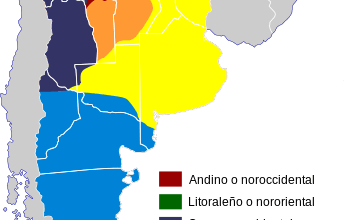
The Republic of Argentina is a country belonging to South America, whose capital is Buenos Aires. It has a population of 44 million inhabitants (31st) and an area of 2,780,400 km 2 (8th), making it the largest Spanish-speaking country in the world. Its human development index is very high (47th) and its official currency is the Argentine peso. And what language is spoken in Argentina? What language do you speak in Argentina? Argentina does not have any official language; the de facto national language is Spanish, spoken by practically the entire population. Provinces such as Corrientes or Chaco establish other…
Read More »