Africa
-
Traditions and customs of Madagascar
What traditions and customs are there in Madagascar? We fully immerse ourselves in the customs and traditions of Madagascar. Gastronomy Food in daily life Rice is the staple of the Malagasy diet. It is usually accompanied by some form of kabaka (a protein dish such as fish, meat, chicken, or beans). In some parts of the island, a side dish (“romazava”) made of green leafy vegetables in broth is common. Side dishes generally serve to add flavor to the rice rather than provide nutrients. Most Malagasy main dishes are prepared in one of four ways: fried, grilled, boiled in water,…
Read More » -
Libya

History of Libya
Brief history of Libya summarized We briefly enter the history of Libya, a country with a long tradition, passing through the Roman Empire, the country where Gaddafi was born. Ancient Libya At first Libya was inhabited by Berber tribes. After 1000 BC a Lebanese people called the Phoenicians settled in Tripolitania (western Libya). They founded Tripoli. Later the ancient Greeks settled in Cyrenaica (eastern Libya). Both areas of Libya later became part of the Roman Empire. A Roman emperor named Septimius Severus (193-211) was a native of the great city of Leptis Magna in Roman Libya. Unfortunately, Leptis Magna was…
Read More » -
Africa
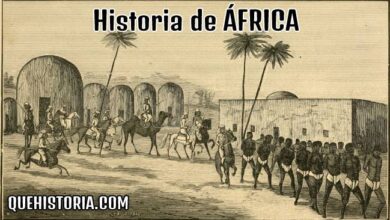
History of Africa
Brief history of Africa summarized A brief summary of the exciting history of Africa, the continent where Homo Sapiens emerged. Ancient Africa Scientists believe that Africa was the birthplace of humanity and is where our story begins. Around 100,000 BC, modern humans lived by hunting and gathering with stone tools. From Africa they spread to Europe. By then 5,000 farmers had spread to North Africa. The people were engaged in livestock and agriculture. At that time the Sahara desert was not a desert. It was a green and fertile area. Gradually it dried up and became a desert. Meanwhile, writing…
Read More » -
Namibian history
Brief history of Namibia summarized In the year 1487 a Portuguese named Bartolomé Díaz arrived in what is now Namibia. However, Europeans showed little interest in Namibia until the 19th century because there was a desert along its coast. However, in 1884 Namibia became a German colony. However, at first the Germans showed little interest in Namibia. The number of German settlers gradually increased until in 1904 the Herero people revolted. However, the Germans brutally suppressed the uprising. The Nama people in Namibia started a guerrilla war, but by 1907 they had been defeated, again with great brutality. In 1915,…
Read More » -
Liberian history
Brief history of Liberia summarized A brief review of the history of Liberia, an African country. Old Liberian The ancestors of the indigenous people of Liberia are believed to have migrated there between the 12th and 16th centuries. The Portuguese arrived on the coast in the 15th century and began trading in pepper, ivory and slaves. In 1816 the American Colonization Society was formed. Their goal was to resettle free black Americans in Africa. In 1822 a colony was founded on the coast. In 1824 the capital was named Monrovia in honor of United States President James Monroe. The new…
Read More » -
Cameroon
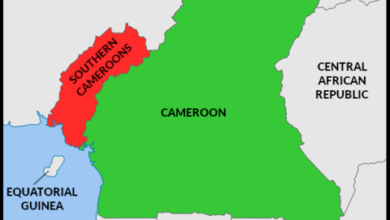
Cameroon language
The Republic of Cameroon is a country that belongs to Africa, whose capital is Yaoundé (the most populous city is Douala). It has a population of more than 24 million inhabitants (56th) and an area of 475,442 km 2 (53rd). Its human development index is medium (151º) and its official currency is the CFA Franc of Central Africa. And what language is spoken in Cameroon? What language do they speak in Cameroon? Cameroon has two official languages: French , spoken by 40% of the population. English , which is spoken by 31.3% of its inhabitants. The Cameroonian government encourages bilingualism,…
Read More » -
Traditions and customs of Cameroon
What customs and traditions are there in Cameroon? A brief review of the traditions and customs that exist in this country, Cameroon. Feeding Food in daily life Sharing cooked food is one of the main ways to cement social relationships and express the high value placed on human company. Sharing food and drink demonstrates hospitality and trust. Social support networks among relatives and friends, particularly among peasants and urban relatives, are symbolically held together by gifts of cooked and uncooked food. Sacks of beans, corn or peanuts “from home” can be seen on the roofs of taxis traveling between the…
Read More » -
Angolan history
Brief history of Angola summarized A brief summary of the history of Angola, a country that was colonized by Portugal. Old Angola In the Middle Ages, what is now Angola was organized into kingdoms. The people lived from agriculture. Artisans made things out of metal and pottery. The Portuguese first arrived in Angola in 1483, but initially showed little interest in the area. The first Portuguese colony in Angola was not founded until 1575. In the 17th and 18th centuries, Angola was a source of slaves for the Portuguese. Many were transported to Brazil. However, the slave trade was abolished…
Read More » -
Ghanaian traditions and customs
What traditions and customs are there in Ghana? A brief review of the traditions and customs of Ghana, a country on the African continent, which was colonized by Great Britain. Food and economy Food in daily life The staple diet consists of a starchy staple eaten with a soup or stew. Forest crops, such as bananas, cassava, cocoyam (taro), and tropical yams, predominate in the south. Maize is important, especially among the Ga, and rice is also popular. The main dish is fufu, mashed plantain or tubers in combination with yucca. Soup ingredients include common vegetables and some animal proteins,…
Read More » -
Gambian history
Brief history of the Gambia summarized A brief review of Gambia’s history summarized. Old Gambia Around 500 AD there was a sophisticated culture in The Gambia, which was capable of building stone circles. Shortly thereafter trade across the Sahara with the Arabs began and then flourished. Powerful states were built in West Africa as a result of trade. In the 13th century the Mali Empire grew in the region. However, it fell into decline in the 15th century and a people called the Mandinka migrated to the Gambia River. Meanwhile, in the 15th century, the Portuguese began to sail along…
Read More »