-
Galicia

The Monastery of San Martiño Pinario de Santiago and its church
Located in the Plaza de la Inmaculada, one of the beautiful squares that surround the Cathedral of Santiago de Compostela, we have the Monastery of San Martiño Pinario, one of the greatest exponents of the Baroque that we can find in the city. There are two well differentiated parts. On the one hand, the monastery itself, where there is an inn and the major seminary, and on the other hand, the church, the most important part of the complex. If you are in Santiago de Compostela, be sure to visit one of the most spectacular places in this World Heritage…
Read More » -
Lao history
Brief history of Laos summarized A brief review of the summarized history of Laos, a country on the Asian continent. Laos in ancient times The first inhabitants of Laos were hunter-gatherers. Later they dedicated themselves to the cultivation of rice and vegetables. Early farmers used stone tools, but in Laos bronze was used from 2000 BC and iron from about 500 BC. However, unlike in Vietnam, the people of Laos were influenced by Indian rather than Chinese culture. Beginning in the 1st century AD, Indian merchants introduced Theravada Buddhism to Laos. From the 9th to the 13th century, the Khmer…
Read More » -
India
Indian language
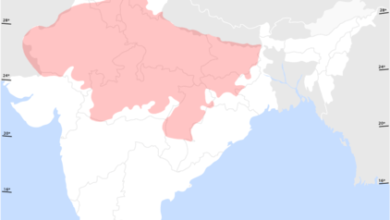
The Republic of India is a country that belongs to Asia and whose capital is New Delhi. It is the 2nd most populous country in the world, with more than 1,300 million people, and the 7th largest (3,287,263 km 2). Its human development index is medium (131st) and its official currency is the Indian rupee. And what language is spoken in India? What language do they speak in India? India has no declared national language in its constitution, but has two official languages: Hindi, in the Devanagari script, is the official language. English, as an additional language for the government,…
Read More » -
India

Flora and fauna of India
Indian flora Flora of India comprises a wide variety of indigenous or native plant types. It is estimated that there are more than 50,000 species of plants. The rich floral diversity of India is undoubtedly due to the great variety of climatic and altitudinal variations, together with the variety of ecological habitats. India has areas with almost no rain, as well as the area that receives the highest rainfall in the world. The altitude varies from sea level to high mountain ranges. Habitat types range from the humid tropical Western Ghats to the Thar Desert of Rajasthan and from the…
Read More » -
Indian history
Brief history of India summarized A brief review of the history of India, in summary. Ancient Indian The Indus Valley Civilization The first Indian civilization arose in the Indus Valley around 2600 BC It actually straddled northwestern India and Pakistan. By 6,500 BC the people of the area had begun to farm. By 5,500 BC they had already invented pottery. By 2600 BC a prosperous agricultural society had grown. Farmers used bronze tools. They grew wheat, barley, and peas. They also raised cattle, goats and sheep. Water buffalo were used to pull carts. People spun cotton and traded with other…
Read More » -
Traditions and customs of India
What traditions and customs are there in India? Immersion in the world of Indian customs and traditions. Gastronomy Food in daily life About half of the population eat rice as a staple food, while the rest subsist on wheat, barley, maize and millet. Therefore, there are important geographical differences in diet. Just as fundamental is the divide between those who eat meat and those who are vegetarian. Muslims, Jews, Sikhs and Christians all eat meat, with the important proviso that the first three groups do not eat pork. Lower caste Hindus eat any meat except beef, while members of the…
Read More » -
Cuban history
Brief history of Cuba summarized A brief brushstroke to the history of Cuba summarized. Cuba in its beginnings The first European to arrive in Cuba was Christopher Columbus in 1492. At that time the indigenous people lived from agriculture. They grew cassava, corn and yams. They also smoked tobacco. In 1511 Diego Velásquez conquered the island of Cuba and founded several settlements including Havana. The natives devastated by European diseases, to which they had no resistance. Beginning in 1526, the Spanish imported African slaves to Cuba. At the end of the 18th century, Cuba prospered from the cultivation and export…
Read More » -
Traditions and customs of Cuba
What traditions and customs are there in Cuba? Great detail of customs and traditions of Cuba, in the following paragraphs. Gastronomy Food in daily life The normal daily diet in Cuba is quite simple. Rice and beans are a staple, supplemented by fried plantains, root vegetables, and vegetables. Cucumbers are a cheap and filling vegetable supplement. While beef was consumed by all segments of the population, pork and chicken have overtaken it as a cheaper alternative. The pork is made into a low-quality ham called vikin ham, which cost about $2 a pound in Havana in the summer of 2000.…
Read More » -
Croatia

Croatian language
The Republic of Croatia is a country belonging to Europe, whose capital is Zagreb. It has a population of more than 4 million inhabitants (129º) and an area of 56,594 km 2 (124º). Its human development index is very high (46th) and its official currency is the Croatian kuna. But what language is spoken in Croatia? What language do they speak in Croatia? Croatia has only one official language, Croatian. Likewise, by law in Croatia, a minority language will be in official use in municipalities where they add up to more than a third of the population (or if the…
Read More » -
History of Croatia
Brief history of Croatia summarized A brief tour of the history of Croatia, a European country, in a summarized way. Ancient Croatia Before 5,000 BC the people of what is now Croatia learned to farm even though they only had stone tools. Later they learned to use bronze and then iron. After 390 BC the Greeks settled in colonies along the coast. Then, after 229 BC, the Romans took control of Croatia. By AD 12 the Romans ruled everything. The Romans divided the area into provinces. The coast became the province of Dalmatia. Part of Croatia became the province of…
Read More »