-
Traditions and customs of El Salvador
What traditions and customs are there in El Salvador? We review the customs and traditions of El Salvador. Gastronomy Food in daily life Corn is the staple of the diet and is most often made into thick tortillas eaten at every meal and also served as tamales and in a thick corn drink called atoll. Small red beans are the other staple food. A variety of fruits and vegetables are consumed, including mango, papaya, tamarind, oranges, bananas, watermelon, cucumber, pacayao, lettuce, tomatoes, and radish. Salvadorans also eat rice, eggs, chicken, pork, beef, fish and shellfish, and some game. Coffee is…
Read More » -
Egypt
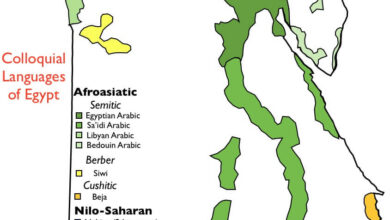
Egypt language
The Arab Republic of Egypt is a country belonging to Africa, whose capital is Cairo. It has a population of 95 million inhabitants (14th) and an area of 1,010,408 km 2 (29th). Its human development index is medium (115º) and its official currency is the Egyptian pound. But what language is spoken in Egypt? What language do they speak in Egypt? Egypt has only one official language, Arabic. The most widely spoken languages in Egypt are: Egyptian Arabic (68%), Saidi Arabic (29%), Bedawi Arabic (1.6%), Domari (0.3%), Nobiin (0.3%), Beya (0,1%). The most common immigrant languages are Greek, Armenian, Italian,…
Read More » -
Egypt

Flora and fauna of Egypt
Flora of Egypt The Egyptian flora is represented by a wide variety of desert plants and trees, unique desert flowers and herbs. The Nile Delta is a green oasis where many kinds of beautiful flowering trees and shrubs are easily found. Variety of plants The Lotus and the Papyrus were the symbols of Lower and Upper Egypt during the time of the Pharaohs and we know from the Holy Quran that Egypt was famous for vegetables such as onions, garlic and lentils. Now palm trees dominate the landscape. The Nile Delta and Nile River Valley have a rich variety of…
Read More » -
History of Egypt
Brief history of Egypt summarized A brief journey through the history of Egypt, from Ancient Egypt to the present day. Ancient Egypt By 5,000 BC the people of Egypt had begun farming. They also weaved linen and made pottery. Later they learned to wear bronze. Around 3,200 BC the Egyptians invented writing. The first Egyptian in history was King Menes, alias Narmer, who lived shortly before 3,100 BC. At that time Egypt was divided into the north (lower) and the south (upper). Around 3118 Menes managed to unite the two. He made Memphis his capital. Ancient Egypt was a highly…
Read More » -
Traditions and customs of Egypt
What traditions and customs are there in Egypt? Overview of the customs and traditions of Egypt. Gastronomy Food in daily life Eating is an important social activity, and it is essential to mark special events and ceremonial occasions. The most important food in daily life is sliced bread. In rural areas, women often bake bread in clay ovens in their homes. In the cities, bread is sold in bakeries. Standard bread is strictly regulated by the government in terms of weight and price, and is one of the few items that still receives a subsidy from the state. Indigenous cuisine…
Read More » -
Ecuador

Ecuador language
The Republic of Ecuador is a country belonging to South America, whose capital is Quito. It has a population of more than 16 million inhabitants (65º) and an extension of 283,561 km 2 (73º). Its human development index is high (86th) and its official currency is the US dollar. But what language is spoken in Ecuador? What language do they speak in Ecuador? The only official language of Ecuador is Spanish. Likewise, other ancestral languages are of official use for the corresponding indigenous peoples. The most widely spoken indigenous language is Quechua, with 1,161,800 speakers (in all its variants). Other…
Read More » -
History of Ecuador
Brief history of Ecuador summarized A brief tour of the summarized history of Ecuador, a South American country. The beginnings of Ecuador The natives of Ecuador grew corn, beans, potatoes, and squashes. They kept dogs and guinea pigs for meat. Many of them were potters and metallurgists skilled in gold, silver and copper. However, at the end of the XV century they were conquered by the Incas. The Spanish first sighted the coast of Ecuador in 1526 and were soon reconquered. The Spanish conquered what is now Ecuador in 1534. The Spanish had already conquered the Incas in what is…
Read More » -
Traditions and customs of Ecuador
What traditions and customs are there in Ecuador? General look at the customs and traditions of Ecuador. Gastronomy Food in daily life The most basic and ubiquitous prepared meal is soup, with many variations depending on region and ingredients. Fish soups from the coast and coconut, potato-based soups from the Sierra and dishes based on Amazonian pepper are accompanied with chicken broth, avocado cream and cow’s foot and tripe soup. The slightly fermented chicha made from cassava by the indigenous people of the Amazon can be considered as a soup in its daily consumption, not ceremonial. Other common non-fermented food…
Read More » -
Denmark
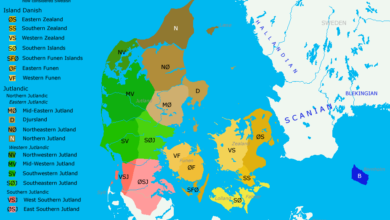
Denmark language
The Kingdom of Denmark is a country belonging to Northern Europe, whose capital is Copenhagen. It has a population of 6 million inhabitants (112º) and an extension of 42,933 km 2 (130º). Its human development index is very high (11th) and its official currency is the Danish crown. But what language is spoken in Denmark? What language do they speak in Denmark? Denmark has only one official language, Danish. Likewise, Denmark recognizes three languages: Faroese, which is spoken by 21,000 inhabitants, is co-official in the Faroe Islands. Greenlandic, spoken by as few as 7,000 people, is the sole official language…
Read More » -
Denmark

History of Denmark
Brief history of Denmark summarized A simple summary of what is the history of Denmark through the centuries. Old Denmark The first humans in Denmark arrived around 10,000 BC, after the end of the last Ice Age. The first Danes were Stone Age hunters and fishermen. Around 4,000 BC agriculture was introduced to Denmark. Early Danish farmers used stone tools and weapons. Around 1,800 BC bronze was introduced to Denmark. Danish craftsmen soon became adept at making bronze wares. Around 500 BC, iron was introduced into Denmark. Iron Age Danes had contact with the Romans. They sold slaves, furs, hides…
Read More »