-
Japan

Japan language
The State of Japan is an island country in East Asia, whose capital is Tokyo. It has a population of 126 million inhabitants (10th) and an area of 377,973 km 2 (61st). Its human development index is very high (19th) and its official currency is the Japanese yen. But what language is spoken in Japan? What language do they speak in Japan? Japan does not have any official language. However, Japanese is the de facto official language, as it is spoken by 99% of the population. In addition to Japanese, several Japonic languages are spoken in the Ryūkyū Islands, such…
Read More » -
Japan

Flora and fauna of Japan
Flora in Japan Around 4,000 to 6,000 species of plants are naturally found in Japan. The vegetation varies greatly from subtropical forest in the south to coniferous forest in the north. In the subtropical zone there are mangroves, cycads and tree ferns. In the warm temperate climate of Kyūshū, Shikoku, and southwestern Honshū, the dominant vegetation is evergreen broadleaf forest with many oaks. To the north Honshū and to the southwest Hokkaidō the climate is cool temperate with broad-leaved deciduous trees, including the Japanese beech (Fagus crenata) and oaks such as the konara (Quercus serrata). Conifers are dominant in much…
Read More » -
Japan

History of Japan
Brief history of Japan summarized A brief tour of the extensive history of Japan, in an entertaining and summarized way. The first Japanese Humans have lived in Japan for at least 30,000 years. During the last ice age, Japan was connected to mainland Asia by a land bridge, and stone age hunters were able to cross it on foot. When the ice age ended, around 10,000 BC, Japan became a group of islands. Around 8,000 BC the ancient Japanese learned to make pottery. The period from 8,000 BC to 300 BC is called the Jomon. The word Jomon means ‘marked…
Read More » -
Japan

Japanese music
The term Japanese music refers to the different genres that are practiced in Japan, both of native and foreign origin. The term “music” in modern Japanese is 音楽 (ongaku), obtained by combining the ideogram 音 (“sound”) with the ideogram 楽 (“music”, “pleasure”). The popular music scene of modern Japan includes a wide range of singers, whose interests range from Japanese rock to Japanese salsa, from Japanese tango to Japanese country. Karaoke, the well-known amateur singing show on a musical basis that takes place in bars and small nightclubs, has its origins in Japan. Japanese music, like oriental music in general,…
Read More » -
Traditions and customs of Japan
What traditions and customs are there in Japan? We investigate what are the customs and traditions of Japan. Food in daily life An extremely varied diet uses culinary elements from around the world, including the cuisines of Korea, China, South and Southeast Asia, Europe, and North America. However, notions of “traditional” Japanese cuisine are an important element of cultural identity. The characteristics that define it are the ingredients, the styles of preparation and the aesthetics. White rice is a staple of virtually every meal; other typical ingredients include soy and shellfish products that are served grilled or raw. Vegetables and…
Read More » -
Jamaica

Jamaican language
Jamaica is a country belonging to the Antilles, in Central America, whose capital is Kingston. It has a population of 3 million inhabitants (139º) and an area of 10,991 km 2 (160º). Its human development index is high (97th) and its official currency is the Jamaican dollar. But what language is spoken in Jamaica? What language do they speak in Jamaica? Jamaica has one official language, English. However, Jamaica is a bilingual country (46.4%), since Jamaican Patois is spoken in addition to English, being this the most widely spoken language (36.5% of the population speaks only Patois, while 17.1% of…
Read More » -
Jamaican history
Brief history of Jamaica summarized A brief tour of the history of Jamaica, in a clear and summarized way. Europeans discover Jamaica Beginning in AD 800, a people called the Arawaks lived in Jamaica. They were farmers in the stone age, although they also hunted and fished. The Arawaks grew beans, cassava, and corn. They also grew cotton. However, in 1494 Christopher Columbus landed in Jamaica. The Spanish and the Arawaks briefly fought, but the Spanish easily won thanks to their superior weapons. However, Columbus soon set sail and the Spanish showed little interest in Jamaica. In 1503 Columbus sailed…
Read More » -
Jamaican traditions and customs
What traditions and customs are there in Jamaica? We review the customs and traditions of Jamaica. Gastronomy Food in daily life A morning “country” meal, called “drinking tea”, includes boiled bananas or toasted breadfruit, sautéed callaloo with “saal fish” (salted cod) and “bush” (herbal) or “chaklit” (chocolate) tea. Afro-Jamaicans eat a mid-afternoon lunch as the main meal of the day. This is followed by a light meal of bread, fried plantains, or fried dumplings and a hot drink in the early evening. A more rigid work schedule has forced changes, and now the main meal is eaten in the evening.…
Read More » -
Italy
Italy language
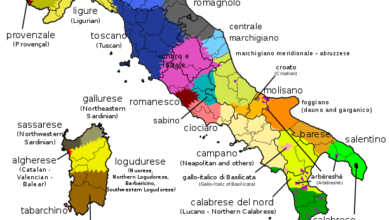
The Italian Republic is a country belonging to Europe, whose capital is Rome. It has a population of 61 million inhabitants (23rd) and an area of 301,340 km 2 (71st). Its human development index is very high (28th) and its official currency is the euro. And what language is spoken in Italy? What language do they speak in Italy? Italy has one official language, Italian. However, the Italian country enjoys a wide variety of minority languages (many of them regional autochthonous); 12 are recognized and 4 of them are co-official at the regional level since 1999: Albanian (arbëreshë dialect) (100,000…
Read More » -
Italy

Flora and fauna of Italy
Flora of Italy Due to the long period of settlement in the Italian peninsula and the strong Roman culture, the natural vegetation and forests of Italy had been destroyed very early. Crops, pastures and vineyards replaced the natural vegetation. However, one of the hallmarks of contemporary Italy was established by man (olive groves, cypresses, pines, vineyards…). Beyond the three main plant species that are found almost everywhere in Italy (holly, cork oak and pine), the original vegetation has been preserved mainly in the more remote border areas and in Sardinia. It was estimated that the flora of Italy is composed…
Read More »