Typical Food
-
Poland

Typical Polish food
Geographic setting and environment Poland is in Eastern Europe. It is slightly smaller than New Mexico, and has lowlands, a narrow coastal area with rocky cliffs, and a southern region rich in minerals and fertile farmland. Poland fights against air and water pollution. In the late 1990s, Poland ranked twelfth in the world for industrial carbon dioxide emissions. Water pollution in the Baltic Sea off the coast of Poland is ten times higher than in the ocean as a whole. Environmental protection was a high priority for the government at the beginning of the 21st century. History and food The…
Read More » -
Spain
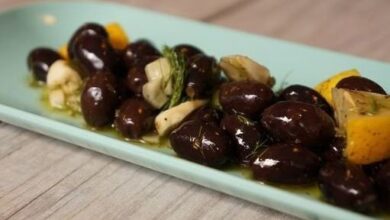
Typical food from Spain
Geographic setting and environment With Portugal, Spain forms the Iberian Peninsula, or Iberia. Iberia is separated from the rest of Europe by the Pyrenees mountains, which rise to a height of 3,404 meters. The peninsula is bordered by the waters of the Mediterranean Sea to the east, the Strait of Gibraltar to the south, the Atlantic Ocean to the west, and the Bay of Biscay to the northwest. Spain’s miles of coastline (more than any other European country) provide it with abundant seafood and fish. Spain is also a close neighbor of Africa. Morocco is a short distance – thirteen…
Read More » -
Thailand
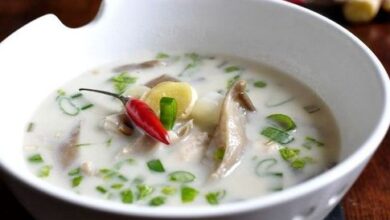
Typical food of thailand
Geographic setting and environment Comprising an area of 514,000 square kilometers (198,456 square miles) in Southeast Asia, Thailand (formerly known as Siam) extends almost two-thirds down the Malay Peninsula. Comparatively, the area occupied by Thailand is just over twice the size of the state of Wyoming. Thailand can be divided into five large physical regions: the central valley, facing the Gulf of Thailand; the northern and northwestern continental highlands, which contain Thailand’s highest point, Doi Inthanon (2,565 meters); the northeast, much of it often called the Khorat Plateau; the small coastal region in the southeast facing the Gulf of Thailand;…
Read More »