Europe
-
France

French music
The music of France reflects a wide variety of styles. In the field of classical music, France has produced several prominent romantic composers, while folk and popular music has seen the rise of the chanson and cabaret style. The world’s first known sound recording device, the phonograph, was patented in France by Édouard-Léon Scott de Martinville in 1857. France is also the fifth largest market by value in the world, and its music industry has produced many artists. Internationally renowned, especially in new song and electronic music. The history of French music dates back to the organ in the 10th…
Read More » -
Traditions and customs of France
What traditions and customs are there in France? Extensive explanation of the duties, customs and traditions of France, a European country. Gastronomy Food in daily life Food plays an important role in the country’s social life. Wine and cheese are a source of national pride and reflect regional differences. Meals are ritualized and full of social and cultural meaning. There are also political aspects in the meaning of food. For example, recently there has been much concern about the quality of “engineered” foods and a rejection of foods that have been genetically altered. Another recent concern was vache folle (mad…
Read More » -
Finland

Language of Finland
The Republic of Finland is a country belonging to Europe, a member of the European Union, whose capital is Helsinki. It is the 111th most populous country (5.5 million) and the 65th largest (338,145 km 2). Its human development index is very high (22nd) and its official currency is the euro. But what language is spoken in Finland? What language do they speak in Finland? Finland has two official languages: Finnish (or Finnish), which is the native language of 89% of the population. Swedish , which is spoken natively by 5.3% of the population. In northern Finland, in Lapland, there…
Read More » -
Finland
History of Finland
Brief history of Finland summarized If you are interested in knowing a little more about the history of Finland, you are in the right place. Former finland The first humans arrived in Finland around 7,000 BC after the end of the last ice age. The early Finns were stone age hunters and gatherers. For thousands of years, successive waves of people migrated to Finland. From the year 2,500 BC, the population of Finland began to live from agriculture. Around 1500 BC they learned to make bronze tools and weapons. Around the year 500 BC in the Finnish lands they learned…
Read More » -
Finnish traditions and customs
What traditions and customs are there in Finland? Finland (suomi) as a nation has existed for not long. However, it has always been inhabited by people who have forged centuries-old traditions and varied customs. Food Food in daily life Milk is prominent in the diet as a beverage and the staple ingredient in a variety of curdled, sour, and cultured forms; in broths used for soups, stews and puddings; and in special regional dishes such as ‘cheese bread’ (‘juustoleipä’). There are notable differences between western and eastern Finland in bread making and in the way milk is made bitter. A…
Read More » -
Europe
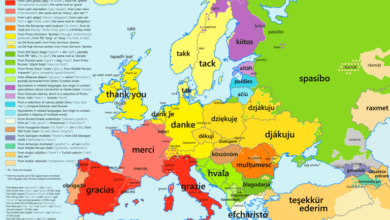
What languages are spoken in Europe?
Most of the languages of Europe belong to the Indo-European family. Out of a total population of 740 million, there are 94% native speakers of some Indo-European language. Within this, the three largest groups are the Slavic, Germanic and Romance languages, with more than 200 million speakers each, representing a total of 90% of European languages. Other small groups of languages are Greek (10 million), Baltic (7 million), Albanian (5 million), Romani (1.5 million), and Celtic (1 million). And what languages are spoken in Europe? Most spoken languages in Europe Sort from highest to lowest number of native speakers in…
Read More » -
Bulgarian history
Brief history of Bulgaria summarized We give a brief and short review of the history of Bulgaria, a country with a communist history. Ancient bulgarian From about 400 BC a race called the Thracians lived in parts of what is now Bulgaria. The Thracians were a tribal society and were magnificent horsemen. They were also known for making beautiful gold and silver jewelry. Around the year 100 AD the Romans conquered Bulgaria. The Romans founded the city of Trimontium (modern Plovdiv). They also built the city of Serdica on the site of Sofia. In 395 the Roman Empire split in…
Read More » -
Bulgarian traditions and customs
What traditions and customs are there in Bulgaria? Explore the customs and traditions of Bulgaria, a country in Eastern Europe. Food and economy Food in daily life The daily diet is largely based on local, seasonal produce. Bread, an important staple food, is often purchased rather than baked at home. Dairy products are widely consumed, particularly yogurt and white brine cheese. Home-made lunches and dinners often include soups, salads, stews, grilled meats, or stuffed vegetables, while meals away from home may consist of foods such as bread, cheese, sausage, and vegetables. Banitsa is a popular pastry stuffed with cheese and…
Read More » -
Traditions and customs of Bosnia and Herzegovina
What traditions and customs are there in Bosnia and Herzegovina? Details of the customs and traditions of Bosnia and Herzegovina, a country in the Balkan region. Gastronomy Food in daily life Bosnian food has been influenced by both Turkish and Eastern European cuisine. Grilled meat is popular, as are cabbage-based dishes. Bosanski Ionac is a stew of cabbage and meat. Cevapcicici are lamb sausages that are often eaten with a flatbread called somun. Cakes, both sweet and savory, are common; burek and pida (layered cheese or meat pies), zeljanica (spinach pie), and sirnica (cheese pie) are served as main courses.…
Read More » -
History of Belarus
The beginnings of Belarus The oldest settlements of people were found in the Gomel region, near the villages of Yurovichi and Berdyzh. Already at the beginning of the first millennium, Slavic tribes began to settle in Belarus. Gradually, they assimilated the Baltic tribes that lived in these areas, and from the 6th century the first political associations – tribal unions – began to take shape. There were three such unions on Belarusian lands: Krivichi, Dregovichi and Radimichi. One of the oldest cities in Belarus is Polotsk, which is first mentioned in chronicles in the year 862. At the same time,…
Read More »