America
-
History of Trinidad and Tobago
Brief history of Trinidad and Tobago summarized An overview of the brief history of Trinidad and Tobago, in an entertaining and summarized way. Trinidad and Tobago Early Around 5,000 stone age hunter-gatherers came to Trinidad and Tobago by canoe. Then, around 300 BC, a more advanced people arrived. They grew crops such as cassava and sweet potatoes. They also made pottery and wove cotton. However, in 1498 Columbus discovered the island. He called it Trinidad and Tobago because he saw three peaks. The first Spanish settlers arrived in 1592 and built a settlement on the site of San José. In…
Read More » -
Traditions and customs of Puerto Rico
What traditions and customs are there in Puerto Rico? From the Puerto Rican island, the customs and traditions of Puerto Rico. Gastronomy Food in daily life Food preferences were determined by the island’s cultural diversity and predominantly rural lifestyle. Taíno and African influences are seen in the use of tropical fruits and vegetables, seafood, condiments, and legumes and cereals (the ubiquitous rice and beans). The Spanish brought culinary techniques and wheat products and introduced pigs and cattle. The tropical climate required the importation of canned food; dried cod was for a long time one of the mainstays of the diet.…
Read More » -
Peru
Peru language
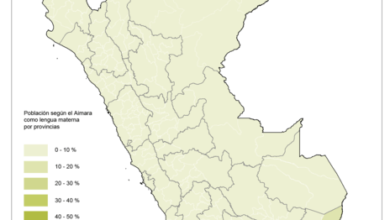
The Republic of Peru is a country located in South America, whose capital is Lima. It has a population of more than 32 million inhabitants (43rd) and an area of 1,285,216 km 2 (19th). Its human development index is high (89º) and its official currency is the Sol. But what language is spoken in Peru? What language do they speak in Peru? Peru has an official language, Spanish. However, Peru has several co- official languages: the aboriginal languages, in the areas where they predominate (among which Quechua and Aimara stand out). In theory, every Peruvian can communicate with any authority…
Read More » -
History of Peru
Brief history of Peru summarized A brief review of the summarized history of Peru, a country in South America. The Chavín in Peru Around 2,500 BC in what is now Peru they began to cultivate. By 1800 BC they were already making pottery. The first South American civilization was the Chavín. It emerged in what is now Peru around 900 BC. The Chavín did not invent writing, but they were skilled architects, stonemasons, potters, and goldsmiths. They built in both brick and stone and their engineers were able to build dams and reservoirs. Chavín farmers irrigated their land and grew…
Read More » -
Traditions and customs of Peru
What traditions and customs are there in Peru? In this article we will learn about the customs and traditions of Peru. Gastronomy Food in daily life Peru is known for its different cuisine. Daily food customs are regionally marked between the coast and the highlands, although both rely heavily on soups and rice as staples. In this way, shellfish and plantains are typical of the coastal diet, while different types of meat, corn and potatoes are consumed much more frequently in the highlands. Ceviche, fish marinated in ají, a spicy sauce made primarily of hot peppers, tomato, onion, and lemon,…
Read More » -
Paraguay
Paraguayan language
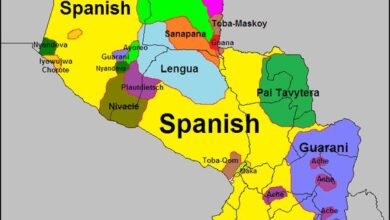
The Republic of Paraguay is a country belonging to South America, whose capital is Asunción. With 7 million inhabitants, it is the 104th most populous country in the world, and the 59th largest (406,752 km 2). Its human development index is medium (110º) and its official currency is the Paraguayan Guarani. And what language is spoken in Paraguay? What language do they speak in Paraguay? Paraguay has two official languages: Guarani, spoken by 90% of Paraguayans. Spanish , which is spoken by 87% of the population. Most Paraguayans are bilingual, especially in urban areas; on the other hand, in rural…
Read More » -
Jamaica

Jamaican language
Jamaica is a country belonging to the Antilles, in Central America, whose capital is Kingston. It has a population of 3 million inhabitants (139º) and an area of 10,991 km 2 (160º). Its human development index is high (97th) and its official currency is the Jamaican dollar. But what language is spoken in Jamaica? What language do they speak in Jamaica? Jamaica has one official language, English. However, Jamaica is a bilingual country (46.4%), since Jamaican Patois is spoken in addition to English, being this the most widely spoken language (36.5% of the population speaks only Patois, while 17.1% of…
Read More » -
Jamaican history
Brief history of Jamaica summarized A brief tour of the history of Jamaica, in a clear and summarized way. Europeans discover Jamaica Beginning in AD 800, a people called the Arawaks lived in Jamaica. They were farmers in the stone age, although they also hunted and fished. The Arawaks grew beans, cassava, and corn. They also grew cotton. However, in 1494 Christopher Columbus landed in Jamaica. The Spanish and the Arawaks briefly fought, but the Spanish easily won thanks to their superior weapons. However, Columbus soon set sail and the Spanish showed little interest in Jamaica. In 1503 Columbus sailed…
Read More » -
Jamaican traditions and customs
What traditions and customs are there in Jamaica? We review the customs and traditions of Jamaica. Gastronomy Food in daily life A morning “country” meal, called “drinking tea”, includes boiled bananas or toasted breadfruit, sautéed callaloo with “saal fish” (salted cod) and “bush” (herbal) or “chaklit” (chocolate) tea. Afro-Jamaicans eat a mid-afternoon lunch as the main meal of the day. This is followed by a light meal of bread, fried plantains, or fried dumplings and a hot drink in the early evening. A more rigid work schedule has forced changes, and now the main meal is eaten in the evening.…
Read More » -
Traditions and customs of El Salvador
What traditions and customs are there in El Salvador? We review the customs and traditions of El Salvador. Gastronomy Food in daily life Corn is the staple of the diet and is most often made into thick tortillas eaten at every meal and also served as tamales and in a thick corn drink called atoll. Small red beans are the other staple food. A variety of fruits and vegetables are consumed, including mango, papaya, tamarind, oranges, bananas, watermelon, cucumber, pacayao, lettuce, tomatoes, and radish. Salvadorans also eat rice, eggs, chicken, pork, beef, fish and shellfish, and some game. Coffee is…
Read More »