-
Ugandan history
Brief history of Uganda summarized A brief review of the history of Uganda, an African country. The British in Uganda In 1875 the explorer Henry Stanley arrived in Uganda. At that time Uganda was divided into kingdoms. Soon after, the first missionaries arrived in Uganda. The first Anglican missionaries arrived in Uganda in 1877. The first Catholic missionaries arrived in 1879. Catholics, Protestants and Muslims tried to convert the Ugandans. However, there was much hostility towards the new religions. In 1885, James Hannington, the first Bishop of Eastern Equatorial Africa, was assassinated. However, in the wake of the missionaries came…
Read More » -
Ukraine
Ukrainian language
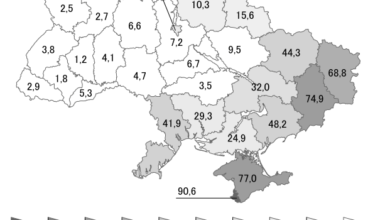
Ukraine is a country belonging to Europe, whose capital is Kiev. It is the 32nd most populous country in the world, with 42.4 million inhabitants, and the 45th largest (603,628 km 2). Its human development index is high (84th) and its official currency is the Ukrainian hryvnia. And what language is spoken in Ukraine? What language do they speak in Ukraine? Ukraine under its constitution has only one official language, Ukrainian, which is spoken by two-thirds of the population. Due to the legacy of the Soviet Union, most of these Ukrainian speakers speak Russian as a second language. 30% of…
Read More » -
Ukraine

History of Ukraine
Brief history of Ukraine summarized A brief overview of the history of Ukraine. The early history of Ukraine In the 7th century BC a people called the Scythians lived in what is now the Ukraine. Later, the Greeks settled on the northern shore of the Black Sea and founded city-states there. The Slavs settled in Ukraine in the 5th and 6th centuries AD Then, in the 9th century, the Swedish Vikings sailed along the rivers into the heart of Eastern Europe. Some of them settled in Ukraine. In 882 a Viking named Oleg captured kyiv and made it the capital…
Read More » -
Traditions and customs of Ukraine
What traditions and customs are there in Ukraine? Ukraine, a former Soviet country, enjoys an extensive number of customs and traditions. Gastronomy Food in daily life Ukrainians prefer to eat at home, leaving restaurants for special occasions. Meal hours are from 7:00 to 10:00 AM for breakfast, 12:00 noon to 3:00 PM for dinner or lunch, and 5:00 to 8:00 PM for dinner. The main meal of the day is dinner, which includes soup and meat, poultry, or a fish dish with salad. Ukrainians generally avoid exotic meats and spices. A variety of soups – collectively called borshch – is…
Read More » -
Turkey

Turkey language
The Republic of Turkey is a country that belongs to Europe and Asia, and whose capital is Istanbul. It has a population of more than 82 million inhabitants (19th) and an area of 783,356 km 2 (36th). Its human development index is high (64th) and its official currency is the Turkish lira. And what language is spoken in Turkey? What language do they speak in Turkey? Turkey has one official language, Turkish. Furthermore, Northern Kurdish is the second most widely spoken language in the country. However, Turkey is home to various minority languages, including Zaza (1,344,000 speakers), North Levantine Arabic…
Read More » -
Turkey
History of Turkey
Brief history of Turkey summarized A brief review of the history of Turkey summarized, cradle of the great Ottoman Empire. Catal Huyuk Catal Huyuk was one of the first cities in the world. It was built in what is now Turkey around 6,500 BC, shortly after agriculture began. Catal Huyuk probably had a population of about 6,000. In Catal Huyuk the houses were made of mud brick. The houses were built in contact with each other. They had no doors and the houses were entered through hatches in the roofs. Presumably, having entrances in the ceilings was safer than having…
Read More » -
Traditions and customs of Turkey
What traditions and customs are there in Turkey? From the former Ottoman Empire, the customs and traditions of Turkey. Gastronomy Food in daily life Turkish cuisine includes many different vegetable and meat stews (mainly lamb and beef); borek skewer dishes, and dolma; and a sourdough bread eaten with almost every meal. Borek is a dough made of many thin layers of dough interspersed with cheese, spinach, and/or ground meat. Kebab is the common word for meat roasted in chunks or slices on a skewer or as meatballs on a grill. Dolma is the generic name for dishes made from vegetables…
Read More » -
Tunisia
History of Tunisia
Brief history of Tunisia summarized A brief and enjoyable review of the history of Tunisia, an African country. Old Tunisia Around 8,000 BC, humans lived in what is now Tunisia by hunting and gathering. After about 5,000 BC they began to farm, although they still used stone tools. Then, around 1100 BC, the Phoenicians from what is now Lebanon settled and traded in the area. Around the year 480 BC the Phoenicians founded Carthage. Little by little this city became stronger. Over time, the Carthaginians built an empire in the Mediterranean. However, they came into conflict with Rome. The first…
Read More » -
Trinidad and Tobago

Trinidad and Tobago language
The Republic of Trinidad and Tobago is one of the countries that forms the Caribbean Islands in America, whose capital is Port of Spain. It has a population of about 1.4 million inhabitants (151º) and an area of 5,131 km 2 (165º). Its human development index is high (69th) and its official currency is the Trinidadian dollar. But what language is spoken in Trinidad and Tobago? What language do they speak in Trinidad and Tobago? Trinidad and Tobago has one official language, English. But despite this, English is not the most widely used language. Each island has its own dominant…
Read More » -
History of Trinidad and Tobago
Brief history of Trinidad and Tobago summarized An overview of the brief history of Trinidad and Tobago, in an entertaining and summarized way. Trinidad and Tobago Early Around 5,000 stone age hunter-gatherers came to Trinidad and Tobago by canoe. Then, around 300 BC, a more advanced people arrived. They grew crops such as cassava and sweet potatoes. They also made pottery and wove cotton. However, in 1498 Columbus discovered the island. He called it Trinidad and Tobago because he saw three peaks. The first Spanish settlers arrived in 1592 and built a settlement on the site of San José. In…
Read More »