-
Australia

Australian history
Brief history of Australia summarized A brief review of the history of Australia, the sixth largest country in the world. Aborigines in Australia Aboriginal people are believed to have arrived in Australia around 40,000 BC during an ice age, when Australia was connected to Asia by a land bridge. Tasmania became isolated from Australia around 8,000 BC when the last ice age ended and sea levels rose. The Aborigines were a hunter-gatherer society. However, dingoes were domesticated around 4000-3000 BC Aborigines hunted with wooden spears and sometimes stone or bone blades. They also used nets. In addition to hunting mammals,…
Read More » -
Australian traditions and customs
What traditions and customs are there in Australia? Annotations on the customs and traditions of Australia, in Oceania. Food and Economy Food in daily life Before colonization, Aboriginal peoples were supported by a diverse range of flora and fauna. The first settlers ate mainly meat (at first indigenous animals, then beef and lamb), bread and vegetables, particularly potatoes. Almost all foods that are eaten regularly – except seafood – were introduced after European colonization. However, there have been considerable changes in patterns of food preferences. In the 1940s meat consumption began to decline, poultry consumption increased dramatically after the 1960s,…
Read More » -
Aruba

Aruban language
Aruba is an autonomous country of the Kingdom of the Netherlands, belonging to South America, whose capital is Oranjestad. It has a population of 100,000 inhabitants and an area of 178.91 km 2. Its human development index is very high, and its official currency is the Aruban florin. And what language is spoken in Aruba? What language do they speak in Aruba? Aruba has two official languages: Dutch, used for administrative and legal purposes, is spoken by 6.1 % of the population. Papiamento, spoken by 69.4% of the inhabitants. Other languages of great importance (as mother tongue) in the country…
Read More » -
Traditions and customs of Aruba
What traditions and customs are there in Aruba? A general explanation of the customs and traditions of Aruba, a Caribbean country. Gastronomy Food in daily life The traditional menu is dominated by corn dishes (“funchi”, pan bati), goat meat, fish and stoba, local vegetable stews (peas, beans). Today, rice, chicken, beef and fish are the most consumed foods. The number one snack is the pastechi, a small pastry filled with cheese or beef. International food chains and Chinese, Italian, and other ethnic restaurants have grown in popularity. Most of the food products are imported. Food customs on ceremonial occasions Food…
Read More » -
Traditions and customs of Armenia
What traditions and customs are there in Armenia? A review of the traditions and customs of the Caucasian country, Armenia. Food in daily life The staple foods are bread and salt. Harissa a traditional food, consists of wheat grain and slow-cooked lamb. Armenians everywhere love grilled meats and vegetables. The pomegranate, with its symbolic association with fertility, is the national fruit. Armenia is also a country of vineyards and grapes. When speaking of friendship, Armenians say that “we have bread and salt between us.” In state protocol, when dignitaries are welcomed, bread and salt are presented. Breakfasts on non-working days…
Read More » -
Argentina
Argentinian language
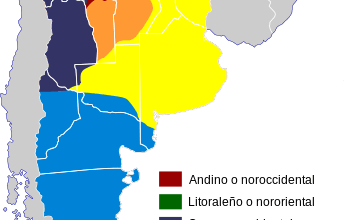
The Republic of Argentina is a country belonging to South America, whose capital is Buenos Aires. It has a population of 44 million inhabitants (31st) and an area of 2,780,400 km 2 (8th), making it the largest Spanish-speaking country in the world. Its human development index is very high (47th) and its official currency is the Argentine peso. And what language is spoken in Argentina? What language do you speak in Argentina? Argentina does not have any official language; the de facto national language is Spanish, spoken by practically the entire population. Provinces such as Corrientes or Chaco establish other…
Read More » -
Argentina

Typical food of Argentina
Geographic setting and environment Argentina is a wedge-shaped country, the second largest (after Brazil) in South America. To the west, you have the Andes mountain range, but most of Argentina’s land is low-lying. Because Argentina is in the southern hemisphere, the winter months are from May to August, and the hottest summer month is January. Argentina’s climate and its rich lowland regions combine to make it one of the world’s largest food-producing nations. More than 4 percent of the world’s livestock is raised by Argentine ranchers. Argentina is also the largest producer of honey in South America, an ingredient that…
Read More » -
History of Argentina
Brief history of Argentina summarized A brief review of the history of Argentina, in a summarized way. Colonial Argentina Before the Europeans arrived in Argentina, it was sparsely populated. In the Northwest people grew potatoes and pumpkins. Sometimes they lived in walled towns and used metal and pottery. However, in most indigenous peoples they lived by hunting animals and gathering plants. They continued their hunter-gatherer lifestyle until the late 19th century. Europeans arrived in present-day Argentina in the 16th century. In 1516 Juan de Solís reached the Río de la Plata but was assassinated by the natives. He was followed…
Read More » -
Traditions and customs of Argentina
What traditions and customs are there in Argentina? A review of the customs and traditions that exist in Argentina, a South American country. Gastronomy Food in daily life Argentines really like meat and pasta. Most restaurants offer a wide assortment of meat and pasta dishes. Spanish and Italian cuisine inspire everyday cuisine, while French -influenced cuisine is reserved for special occasions. It is quite common to buy fresh pasta for Sunday lunch, which is usually a family event (often including extended family). Breakfast is very light and generally includes coffee or tea and milk, toast, butter and jam. In restaurants…
Read More » -
Algeria

Typical Algerian food
Geographic setting and environment Algeria is located in North Africa, on the Mediterranean Sea. The fertile and mountainous northern region is home to olive trees, cork oaks and vast evergreen forests where wild boars and jackals roam. In the warmer areas grow fig trees, agaves and several palm trees. The vine is native to the coastal plain. Central Algeria is made up of high plateaus containing salt marshes and dry or shallow salt lakes. The land becomes more arid (dry) as you go south, eventually becoming the Sahara desert. About 80 percent of the country is desert, where vegetation is…
Read More »