America
-
Traditions and customs of Bolivia
What traditions and customs are there in Bolivia? We delve into the customs and traditions of Bolivia. Food and economy Food in daily life The typical diet is high in carbohydrates but deficient in other food categories. In the highlands, the main staple food is the potato (dozens of varieties of this domesticated Andean are grown), followed by other Andean and European tubers and grains (e.g., oca, quinoa, barley, and increasingly in the Oriente, rice), corn and legumes, especially broad beans. Freeze-dried potatoes (“chuño”) and dried cecina (“ch’arki”) from cattle or Andean camelids (llama, alpaca, and vicuña) are common, although…
Read More » -
Bahamian traditions and customs
What traditions and customs are there in the Bahamas? We will know the customs and traditions of the Bahamas islands. Gastronomy Food in daily life The typical meals of urban residents consist of fruits and vegetables, meat or fish, bread and rice. Outside the island, islanders tend to eat more fresh fruits, vegetables, and fish. The two national dishes are conch, a sea snail, rice, and snap peas. The poor eat these foods because they are cheap and readily available; the wealthiest enjoy them as “heritage foods.” Food customs on ceremonial occasions Holiday meals tend to focus on local fish…
Read More » -

Aruban language
Aruba is an autonomous country of the Kingdom of the Netherlands, belonging to South America, whose capital is Oranjestad. It has a population of 100,000 inhabitants and an area of 178.91 km 2. Its human development index is very high, and its official currency is the Aruban florin. And what language is spoken in Aruba? What language do they speak in Aruba? Aruba has two official languages: Dutch, used for administrative and legal purposes, is spoken by 6.1 % of the population. Papiamento, spoken by 69.4% of the inhabitants. Other languages of great importance (as mother tongue) in the country…
Read More » -
Traditions and customs of Aruba
What traditions and customs are there in Aruba? A general explanation of the customs and traditions of Aruba, a Caribbean country. Gastronomy Food in daily life The traditional menu is dominated by corn dishes (“funchi”, pan bati), goat meat, fish and stoba, local vegetable stews (peas, beans). Today, rice, chicken, beef and fish are the most consumed foods. The number one snack is the pastechi, a small pastry filled with cheese or beef. International food chains and Chinese, Italian, and other ethnic restaurants have grown in popularity. Most of the food products are imported. Food customs on ceremonial occasions Food…
Read More » -
Argentinian language
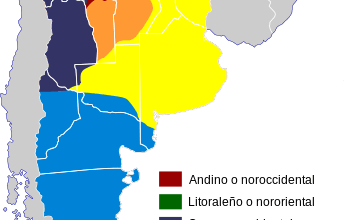
The Republic of Argentina is a country belonging to South America, whose capital is Buenos Aires. It has a population of 44 million inhabitants (31st) and an area of 2,780,400 km 2 (8th), making it the largest Spanish-speaking country in the world. Its human development index is very high (47th) and its official currency is the Argentine peso. And what language is spoken in Argentina? What language do you speak in Argentina? Argentina does not have any official language; the de facto national language is Spanish, spoken by practically the entire population. Provinces such as Corrientes or Chaco establish other…
Read More » -

Typical food of Argentina
Geographic setting and environment Argentina is a wedge-shaped country, the second largest (after Brazil) in South America. To the west, you have the Andes mountain range, but most of Argentina’s land is low-lying. Because Argentina is in the southern hemisphere, the winter months are from May to August, and the hottest summer month is January. Argentina’s climate and its rich lowland regions combine to make it one of the world’s largest food-producing nations. More than 4 percent of the world’s livestock is raised by Argentine ranchers. Argentina is also the largest producer of honey in South America, an ingredient that…
Read More » -
History of Argentina
Brief history of Argentina summarized A brief review of the history of Argentina, in a summarized way. Colonial Argentina Before the Europeans arrived in Argentina, it was sparsely populated. In the Northwest people grew potatoes and pumpkins. Sometimes they lived in walled towns and used metal and pottery. However, in most indigenous peoples they lived by hunting animals and gathering plants. They continued their hunter-gatherer lifestyle until the late 19th century. Europeans arrived in present-day Argentina in the 16th century. In 1516 Juan de Solís reached the Río de la Plata but was assassinated by the natives. He was followed…
Read More » -
Traditions and customs of Argentina
What traditions and customs are there in Argentina? A review of the customs and traditions that exist in Argentina, a South American country. Gastronomy Food in daily life Argentines really like meat and pasta. Most restaurants offer a wide assortment of meat and pasta dishes. Spanish and Italian cuisine inspire everyday cuisine, while French -influenced cuisine is reserved for special occasions. It is quite common to buy fresh pasta for Sunday lunch, which is usually a family event (often including extended family). Breakfast is very light and generally includes coffee or tea and milk, toast, butter and jam. In restaurants…
Read More » -
History of the Dominican Republic
Brief history of the Dominican Republic summarized A brief look at the summarized history of the Dominican Republic. The Dominican Republic in its beginnings The Dominican Republic is part of the island of Hispaniola. Before the arrival of the Europeans, a people called the Arawaks lived there. However, on December 6, 1492, Christopher Columbus landed in the northwest and named the island Hispaniola. Spanish settlers founded San Domingo in 1596. However, a hundred years after Columbus discovered Hispaniola, European disease and warfare had all but wiped out the Arawaks. Meanwhile, the Spanish claimed ownership of the entire island, but settled…
Read More » -
Traditions and customs of the Dominican Republic
What traditions and customs are there in the Dominican Republic? We will see the customs and traditions of the Dominican Republic. Gastronomy Food in daily life The main meal is served at noon and can last up to two hours. Bandera is a nationally popular dish; white rice and red beans recall the colors of the flag, hence its name. The third ingredient is braised meat, which is usually served with fried plantain and salad. Another favorite dish is sancocho, a meat, plantain, and vegetable stew. On the coast, fish and conch are enjoyed, and coconut is used to sweeten…
Read More »